Best Inground Pool Contractors Ohio: How to Choose
Last Updated: November 10, 2026
Quick Summary
To find the best inground pool contractors in Ohio, verify licensing and insurance, get a written contract before paying, and confirm one team is accountable for the whole project. Price matters, but paperwork and accountability matter more, so compare bids line by line on equal scope.
- Call the insurer to confirm general liability and workers' compensation policies are active, not just that a certificate exists.
- Read reviews for pattern, including owner responses to complaints and the same issue appearing three or more times.
- A responsible builder cannot give a firm inground pool price until someone has seen the yard, access, and utility locates.
- Ask who pulls the permits and request the permit number and approval before excavation begins.
- In Northeast Ohio, frost limits the excavation and shell work window, so a fall contract often means a spring swim.
Table of Contents
- What Separates the Best Inground Pool Contractors in Ohio
- Best Inground Pool Contractors Ohio Reviews: How to Read Them
- Best Inground Pool Contractors Ohio Cost: What Drives Your Quote
- Fiberglass Pool Installers Ohio: Where They Fit in Your Search
- Pool Contractor Questions to Ask Before You Sign
- Permits, Zoning, and Safety Rules for Ohio Pool Projects
- Construction Timelines and Seasonal Planning
- Book a Free Consultation with Howland Pools
- Frequently Asked Questions
What Separates the Best Inground Pool Contractors in Ohio
When choosing an inground pool contractor in Ohio, look for proof of licensing and insurance, a written contract before you pay anything, and clear accountability for the whole project.
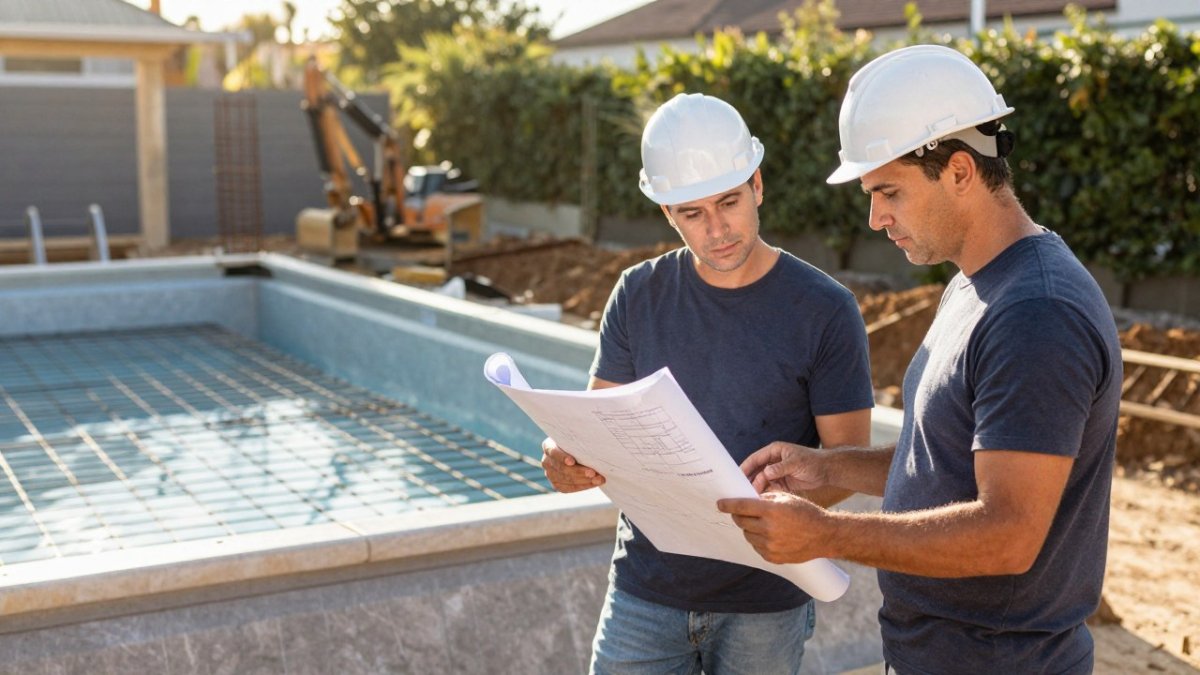
Finding the best inground pool contractors in Ohio starts with knowing what to look for, and that is what this guide from Howland Pools walks you through.
Most homeowners start with price. That is the wrong first filter. A quote that looks low often hides change orders, missing permits, or a crew that disappears after the shell goes in.
Credentials, Licensing, and Insurance to Verify
Ask for proof of licensing and insurance before you talk design, including general liability and workers' compensation coverage. Call the insurer to confirm the policy is active, not just that a certificate exists.
A builder who hesitates on any of these is telling you something. For a full checklist covering licenses, portfolios, and contract terms, see what to look for in pool builders.
Best Inground Pool Contractors Ohio Reviews: How to Read Them
Reviews tell you more about how a company handles problems than how it builds on a good day. Read for pattern, not for stars.
Look for these signals in Ohio pool contractor reviews:
- Reviews that name the specific project type, not just "great pool"
- Responses from the owner to complaints
- A mix of recent and older reviews, not one burst of activity
- Mentions of the same issue appearing three or more times
Check any third-party rating, such as a Better Business Bureau profile, as a starting point, then verify the complaint history behind it. A company can carry a high rating with a long list of resolved complaints, and that history is worth reading.
Best Inground Pool Contractors Ohio Cost: What Drives Your Quote
Most homeowners want a number before they want a design, and the honest answer is that a responsible builder cannot give you a firm inground pool price until someone has seen the yard, the access, and the utility locates. For a full breakdown of what drives the cost of custom inground pools, see our pricing guide.
A typical residential inground pool project generally falls into several cost categories. Treat these as the categories every quote should itemize, not as a single advertised price:
- Excavation and site prep. This is where yards differ most. A flat lot with a wide gate and room for a track hoe is the low-cost case. A sloped yard that needs retaining walls, a tight side-yard access that forces a smaller machine, or a site where the spoil pile has to be hauled away all add cost before the shell goes in.
- Pool structure and finish. The shell, wall system, and interior finish are the core of the bid. Vinyl, fiberglass, and concrete each carry a different base cost and a different long-term upkeep profile, covered below.
- Equipment and plumbing. Pump, filter, heater, skimmer and return layout, lighting, and automation are frequently where low bids are thin. Ask whether the quote names the equipment model and horsepower or just says "standard equipment."
- Decking and hardscape. The pool is often the smaller half of the backyard budget. Concrete, pavers, and coping are priced by square foot and by edge detail, and the deck footprint is a decision you control.
- Permits, inspections, and compliance. Application fees, barrier and fence requirements, and any engineering or survey work belong in the bid. A quote that omits them is not cheaper, it is incomplete.
Site conditions can move the number more than most homeowners expect. Clay-heavy soils, rock encountered during digging, and a high water table can each add time and cost, so ask every bidder how they handle each one and whether the contract states who pays if rock or groundwater appears.
Watch out: The lowest bid is often the one with the most exclusions. Electrical hookups, final grading, fence code compliance, and equipment start-up are common line items left vague or omitted, and they reappear later as change orders.
How to Compare Bids Line by Line
Put every quote into the same worksheet before you decide. List excavation, shell, finish, equipment by model number, plumbing, electrical, decking, fencing, permits, and cleanup as separate rows, and mark each one as included, excluded, or allowance. An allowance is a placeholder number the builder expects to exceed, ask what happens when it does. Then compare three things side by side: the total of included scope, the warranty terms, and the payment schedule.
Material Trade-Offs and Long-Term Ownership Costs
Each pool material carries its own upfront and lifecycle profile, and your builder should explain the trade-offs for the options it offers. Ask which materials are available for your project and what each one means for long-term upkeep.
Budget beyond the build. Chemicals, heating, electricity for the pump, seasonal opening and closing, and equipment service are recurring costs from the first season.
Every responsible quote should itemize these cost categories so you can compare bids on equal terms.
| Cost category | What it covers | Note |
|---|---|---|
| Excavation and site prep | Digging, access, retaining walls, spoil haul-away | Where yards differ most |
| Pool structure and finish | Shell, wall system, interior finish | Vinyl, fiberglass, concrete differ in base cost |
| Equipment and plumbing | Pump, filter, heater, skimmers, lighting, automation | Low bids are often thin here |
| Decking and hardscape | Concrete, pavers, coping priced by square foot | Deck footprint is your decision |
| Permits, inspections, compliance | Application fees, barrier and fence rules, engineering | Omitting them makes a quote incomplete |
Fiberglass Pool Installers Ohio: Where They Fit in Your Search
In Northeast Ohio, clay soil and freeze-thaw cycles affect how any inground pool is set, so base preparation and backfill matter as much as the pool shell itself.
If you are weighing fiberglass against concrete, read is a fiberglass pool good for Northeast Ohio before you commit. The climate and soil answers change the decision more than the brochure photos do.
Pool Contractor Questions to Ask Before You Sign
Ask these in the first meeting, not the last:
- Who pulls the permits, and will you show me the approval before digging?
- Which crew installs the pool, the patio, and the fence, and are they employees or subcontractors?
- What is the payment schedule, and how much is due before work starts?
- What happens if we hit rock or groundwater during excavation?
- Who handles warranty calls after the project closes?
The answer to the subcontractor question matters most. When one team builds the pool and the patio, nobody can point fingers when something settles. A single point of accountability is one reason to choose a builder that manages projects start to finish.
Permits, Zoning, and Safety Rules for Ohio Pool Projects
Pool construction and safety are typically governed by residential building codes and local jurisdiction requirements, including barrier rules intended to prevent unsupervised access.
Expect the approval process to touch these items:
- Zoning and setbacks. Local rules govern how close the pool, deck, and equipment pad can sit to property lines, easements, and structures. A survey may be required to prove compliance, especially on smaller or corner lots.
- Barrier and safety requirements. Pool barriers, fencing, gates, self-latching hardware, and in some cases door alarms or safety covers, are inspected, not just recommended. Confirm the required height and gate specifications with your building department, because the inspector will.
- Electrical and bonding. Pool equipment, lighting, and the bonding grid are inspected under electrical provisions, often as a separate inspection from the structural one. This is a common source of failed inspections when a low bid omits electrical scope.
- Grading and drainage. Final grade and stormwater management may be reviewed, particularly where the pool changes drainage patterns toward a neighbor's lot.
- Engineering. Some jurisdictions require engineered plans or soil information for retaining walls, steep sites, or certain pool types.
The inspection sequence usually runs in stages: pre-excavation or layout, pre-shell or pre-backfill, electrical and bonding, barrier, and final.
Watch out: If the builder says the homeowner handles the permit application, that is now your project management job, and any delay or failed inspection lands on your schedule, not theirs.
Who Pulls the Permit, and Why It Matters
The permit holder is accountable to the building department for code compliance. When the contractor pulls the permit, the inspection record and any correction notices run through the company, and the closeout documentation stays with the project. When the homeowner pulls it, the homeowner absorbs that risk. If you are unsure whether pool companies handle building permits for you, that guide explains who pulls them and how to verify approval.
A Due-Diligence Checklist Before You Sign
Verify the contractor's registration where your jurisdiction requires it, and request a certificate of insurance for general liability and workers' compensation, then call the insurer to confirm the policy is active. Ask for a written contract that names the permit responsibility, the inspection schedule, the payment schedule, the change-order process, and the warranty terms. Request three recent local references and ask each one how the builder handled inspections and any correction notices. A builder who welcomes these questions is showing you how the project will go.
Construction Timelines and Seasonal Planning
A typical inground pool build runs several weeks to a few months once permits are approved, and weather can add time on either end. In Northeast Ohio, the practical window for excavation and shell work is limited by frost, so a fall contract often means a spring swim.
Plan backward from the summer you want to use the pool. A realistic timeline for backyard pool construction helps you decide whether this season is achievable or next year is the honest answer.
Book a Free Consultation with Howland Pools
The right builder is the one whose paperwork, crew, and timeline all hold up when you ask hard questions. If you are ready to compare a real plan against the quotes you have, Howland Pools offers a free consultation and provides comprehensive service covering pools, patios, enclosures, and outdoor kitchens, built start to finish by one team.
Get started with Howland Pools and turn your backyard into a space your family uses all summer.
Frequently Asked Questions
How do I choose a reputable inground pool contractor in Ohio?
Start by verifying the contractor's state registration, liability insurance, and workers' compensation coverage. Ask for references from projects completed in the last two years and read reviews across Google, the Better Business Bureau, and local community groups, not just the company website. Request a written contract that lists materials, timelines, payment milestones, and warranty terms. A builder who handles design, excavation, and installation with one crew reduces the finger-pointing risk if something goes wrong.
How much does an inground pool cost in Ohio?
Pricing depends on pool size, material, site access, and added features like patios, enclosures, or outdoor kitchens. Excavation difficulty and Northeast Ohio soil conditions can shift the number too. Rather than rely on a generic range, ask each inground pool contractor Ohio homeowners shortlist for an itemized quote covering excavation, materials, equipment, and cleanup. Howland Pools offers a free consultation to walk through your specific yard and budget.
What should I ask an inground pool contractor before hiring?
Ask who pulls the permits, whether the installation crew is in-house or subcontracted, and what the warranty covers for the shell, equipment, and patio. Confirm the construction timeline in writing and ask how weather delays are handled. Ask what happens if a problem arises after completion and who the single point of contact is for the whole project.
How long does it take to install an inground pool?
Project duration varies with permits, weather, and whether patios or outdoor kitchens are included, so ask your builder for a realistic estimate for your project. Ask your builder for a milestone schedule, not just a finish date.