Timeline for Backyard Pool Construction: What to Expect
Table of Contents
- How Long Does Backyard Pool Construction Take?
- The Inground Pool Construction Process, Phase by Phase
- The Pool Permit Timeline and HOA Approval
- Gunite Pool Construction Timeline: Shell to Curing
- Coping, Decking, and Finishing Touches
- What Causes Pool Construction Delays
- Conclusion
- Frequently Asked Questions
Last Updated: October 21, 2026
How Long Does Backyard Pool Construction Take?
Most homeowners want the honest number before they sign anything. The realistic timeline for backyard pool construction is 8 to 16 weeks from the day excavation starts to the day you swim. The full process, from signed contract to first swim, usually runs 3 to 6 months once you count design, permits, and inspections.
At Howland Pools, we build custom inground pools and full backyard living spaces across Northeast Ohio, and we tell every homeowner the same thing up front: the calendar is driven less by digging and more by paperwork, weather, and curing time. The 5 phases below show exactly where the weeks go.
One warning before you plan a summer party. A pool started in late spring rarely finishes before fall. If you want to swim this season, the conversation needs to happen in winter.
The Inground Pool Construction Process, Phase by Phase
Every inground pool construction process follows the same basic order. Skip a step and the whole schedule collapses. Here is the sequence we follow on every project.
- Design and contract: 2 to 4 weeks
- Permitting and HOA approval: 2 to 8 weeks
- Excavation and site prep: 2 to 5 days
- Plumbing, electrical rough-in, and steel: 1 to 2 weeks
- Shell application and curing: 4 to 6 weeks
- Coping, decking, and finishes: 2 to 4 weeks
- Start-up and water balancing: 1 week
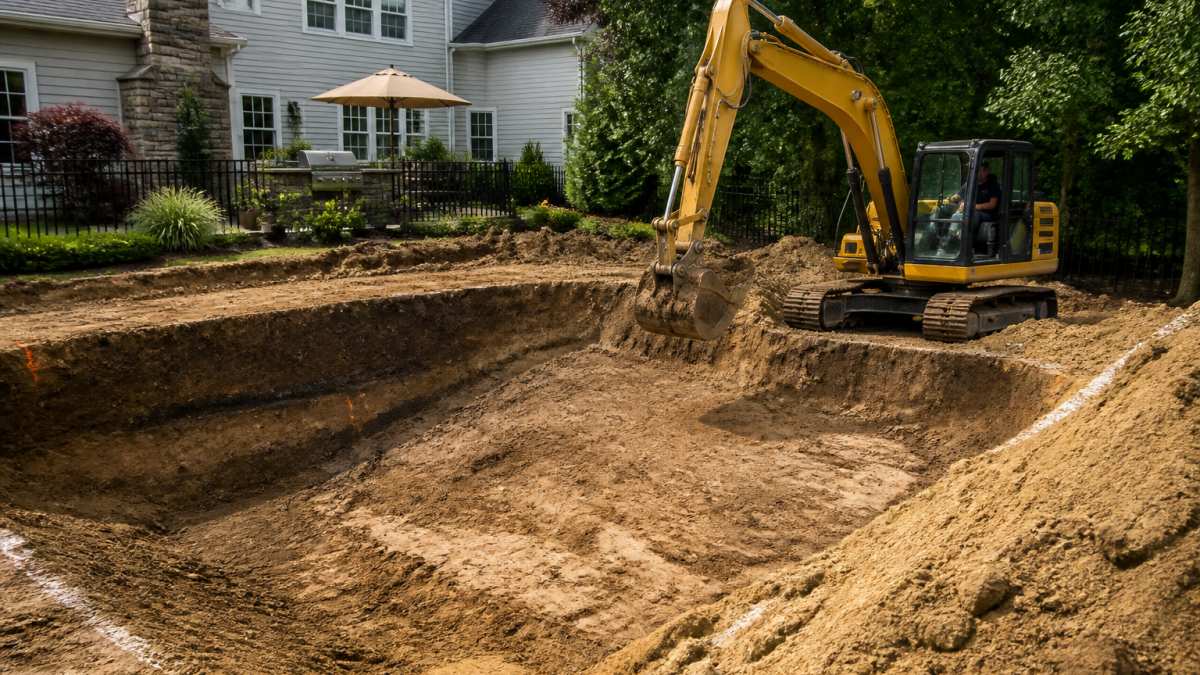
Excavation and Site Preparation
Dig day looks dramatic and takes only a few days. Site access decides how fast it goes. A narrow side yard means smaller equipment and slower digging.
Soil conditions matter too. Rocky ground or a high water table slows excavation and can add cost. We check both before we quote a schedule.
Plumbing, Electrical Rough-In, and Steel Reinforcement
This phase is invisible when it's done, which is why it gets rushed by cut-rate builders. Steel reinforcement forms the skeleton of a gunite pool. Plumbing rough-in sets the lines for skimmers, returns, and drains.
Electrical bonding must be inspected before anything is covered. A failed inspection here stops the job cold, so get it right the first time.
The Pool Permit Timeline and HOA Approval
The pool permit timeline is the single biggest variable in the schedule. A clean permit can clear in 2 weeks. A slow one drags past 8.
Your local building department reviews structural plans, setbacks, and barrier requirements. Many homeowners find the HOA approval process adds another layer on top. Some associations require architectural review before work starts.
We handle the paperwork for our clients, but you should still ask any builder who owns that task. If the answer is "you do," budget extra weeks for the back-and-forth.
Gunite Pool Construction Timeline: Shell to Curing
A gunite pool construction timeline lives or dies on curing time, and curing is the phase homeowners most often try to rush. Gunite is dry-mix concrete sprayed through a hose onto the steel cage; shotcrete is the wet-mix alternative. Both form the structural shell, and both need moisture and time before anything bonds to them.
Here is how the shell phase actually runs on a gunite project:
- Steel inspection: the rebar cage and bonding grid are inspected before any concrete goes on. Skipping this inspection is the fastest way to a stop-work order.
- Shell application: the crew sprays the shell in a single day, working around the plumbing stubs and light niches set during rough-in.
- Initial set and shaping: the surface is trimmed and troweled while it is still workable.
- Curing: the shell is kept damp and protected, typically for about 28 days, before finish prep begins. In hot, dry, or windy weather the shell needs more attention, not less.
- Waterproofing and finish prep: once cured, the surface is prepped for plaster, aggregate, or tile.
Why the wait matters: concrete reaches most of its design strength over that first month. Finishing a shell too early traps moisture and causes cracks, delamination, and surface flaws that show up in the first season, long after the crew has left. A builder who promises to skip curing is trading your finish warranty for their schedule.
Fiberglass and vinyl-liner pools compress this phase. A fiberglass shell is set in a prepared excavation, often in a few days, and a vinyl liner goes in after the wall panels and floor are ready. That is one reason those builds can finish faster than gunite, and one reason the shell phase is where gunite schedules diverge most.
This is where impatient homeowners get burned. The shell looks done, so they push for decking. The right move is to wait, and to get the curing window in writing so the schedule reflects it.
Coping, Decking, and Finishing Touches
Coping caps the pool edge and hides the shell. Decking turns the hole into a backyard. This stage also covers hardscaping, pool equipment installation, and the final grade.
Expect 2 to 4 weeks here, longer if your project includes an outdoor kitchen or enclosure. Finish work is where a good builder earns their reputation. It's also where the finish line finally looks close.
What Causes Pool Construction Delays
Most delays fall into four buckets. Knowing them lets you plan around them instead of panicking, and knowing how each one is recovered is what separates a managed project from a stalled one.
| Delay Cause | Typical Impact | How to Reduce It |
|---|---|---|
| Weather | Days to weeks | Build in a dry window |
| Soil and site access | Days to weeks | Pre-build soil and access check |
| Material lead times | 1 to 6 weeks | Order equipment early |
| Failed inspection | 1 to 3 weeks | Inspect before covering work |
Weather, Soil, and Site Access
Rain turns an open hole into a mud pit. Cold slows curing. In a four-season climate, we build around seasons, not against them, which is why a fall start often means the shell goes in before winter and finishes wait for spring.
Soil conditions and site access drive the rest. A tight lot or unstable soil changes the equipment and the pace. We assess both before quoting a schedule so there are no surprises later.
Supply Chain and Inspection Failure Recovery
Material lead times are the delay most guides ignore. Pumps, heaters, and specialty finishes can lag. Ordering pool equipment early protects the schedule, and the equipment order should be placed when the contract is signed, not when the shell is done.
Inspection failure recovery is the other blind spot, and it is worth walking through because it is the delay homeowners understand least. A failed rough-in inspection, bonding, plumbing pressure test, or steel, means rework, a re-inspection slot, and lost days. The recovery sequence is predictable:
- The inspector issues a correction notice listing what failed.
- The crew performs the rework, which may mean opening up finished areas.
- The project re-enters the inspection queue, which can add days on its own in a busy building department.
- Work resumes only after the re-inspection passes.
Good project management catches issues before the inspector does. Ask any builder how they handle a failed inspection and how quickly they can get a re-inspection slot. The answer tells you a lot about their schedule discipline.
Post-construction maintenance timeline: once you're swimming, expect daily water checks for the first week, weekly chemistry testing after that, and a filter cleaning routine within the first month. Start-up procedure and water chemistry aren't afterthoughts. They're the last phase of the build, and the bridge between "completion" and "first swim." Plaster and aggregate finishes also have their own curing window in the water, so the first month of chemistry is part of the finish's warranty, not just routine upkeep.
Conclusion
A pool project is a marathon with a few sprints inside it. Plan for 3 to 6 months, build in a weather buffer, and treat permits and curing as fixed costs on the calendar, not annoyances.
Howland Pools manages the whole project start to finish with one team, from design and permits to the pool, patio, and outdoor kitchen. No finger-pointing between contractors. Just one crew accountable for the result.
Ready to plan your build? Contact us for a free consultation and a realistic timeline for your backyard.
Frequently Asked Questions
How long does it take to build an inground pool from start to finish?
Most inground pool projects take 8 to 16 weeks from the first excavation to the first swim, though the full pool construction schedule often stretches longer once design, permits, and weather are factored in. A straightforward gunite pool on an easy site can land near the shorter end, while a project with complex decking, an outdoor kitchen, or a difficult lot can push past four months. The best way to get a firm number is to have a contractor walk your yard and map the phases against your target swim date.
What can delay an inground pool construction timeline?
The most common pool construction delays come from weather, soil conditions, permit backlogs, material lead times, and inspection scheduling. Rain can stall excavation and shotcrete, rocky or high-water-table soil adds work, and a failed inspection means rework before the next milestone. Supply chain issues with pumps, heaters, or specialty finishes can also add weeks. Choosing a contractor who manages subcontractors and orders materials early reduces how often these delays hit your schedule.
How long does gunite need to cure before the next stage?
After gunite is sprayed, it typically needs about 28 days to cure before the pool can be plastered and filled, though some builders move to finish work sooner depending on conditions. During this window the shell is watered or misted to slow curing and prevent cracking. Rushing this stage risks surface defects later. Ask your contractor how they handle curing time in your climate, since temperature and humidity affect how quickly the shell sets.
When can you swim after the pool is finished?
You can usually swim within a few days to a week after the pool is filled and the water chemistry is balanced, once the start-up procedure is complete. Plaster pools often need a short break-in period where brushing and chemical adjustments are frequent. Your contractor should walk you through the start-up schedule and the first month of water care so the finish cures properly and the equipment runs as intended.