Is a Fiberglass Pool Good for Northeast Ohio?
Last Updated: October 26, 2026
Quick Summary
Yes, is a fiberglass pool good for northeast in Ohio when properly installed with correct drainage and site preparation. Fiberglass shells flex slightly to absorb freeze-thaw stress better than rigid concrete, and require minimal surface maintenance over 20+ years if the base is compacted and a perimeter drain system is installed.
- Fiberglass pools typically install in 6-12 weeks from permit approval to first swim
- Proper drainage and compacted gravel backfill are critical to prevent gel-coat cracks in clay-heavy Northeast Ohio soil
- Fiberglass costs roughly $45,000-$85,000 upfront but totals $60,000-$110,000 over 20 years including maintenance
- Freeze-thaw cycles crack concrete pools but fiberglass shells flex to reduce structural stress
- Winter pool covers and occasional pump operation protect fiberglass shells during seasonal temperature swings
Table of Contents
- Fiberglass Pool Pros and Cons for Your Climate
- How Northeast Ohio's Freeze-Thaw Cycles Affect Fiberglass Pools
- Fiberglass vs. Concrete Pool: Which Handles Local Conditions Better
- Fiberglass Pool Installation: Timeline and Site Preparation
- Fiberglass Pool Cost: Initial Investment and Lifetime Ownership
- Maintenance and Durability: What to Expect Year-Round
- Starting Your Custom Pool Project
- Frequently Asked Questions
Fiberglass Pool Pros and Cons for Your Climate
Whether is a fiberglass pool good for northeast in Ohio depends on your specific site conditions, but fiberglass pools do offer real advantages for Northeast Ohio homeowners alongside specific trade-offs you need to understand before committing to this type of installation.
Pros of fiberglass pools:
- Fast installation: typically 3-6 weeks from start to finish
- Smooth gel-coat surface that feels comfortable and resists algae growth
- Lower chemical maintenance compared to other pool types
- Durable shell that flexes slightly with ground movement
- Minimal surface degradation over time with proper care
Cons of fiberglass pools:
- Higher upfront cost than vinyl liner pools
- Limited customization in shape and size
- Gel-coat repairs can be expensive if cracks develop
- Requires professional installation with specialized equipment
- Not ideal for very shallow designs or unusual configurations
The real question isn't whether fiberglass is "good", it's whether it's the right fit for your specific situation, your property, and how you plan to use the pool year-round in this climate.
How Northeast Ohio's Freeze-Thaw Cycles Affect Fiberglass Pools
Freeze-thaw cycles are the defining challenge for any inground pool in this region. Water expands when it freezes, and soil shifts when temperatures swing between freezing and thawing.
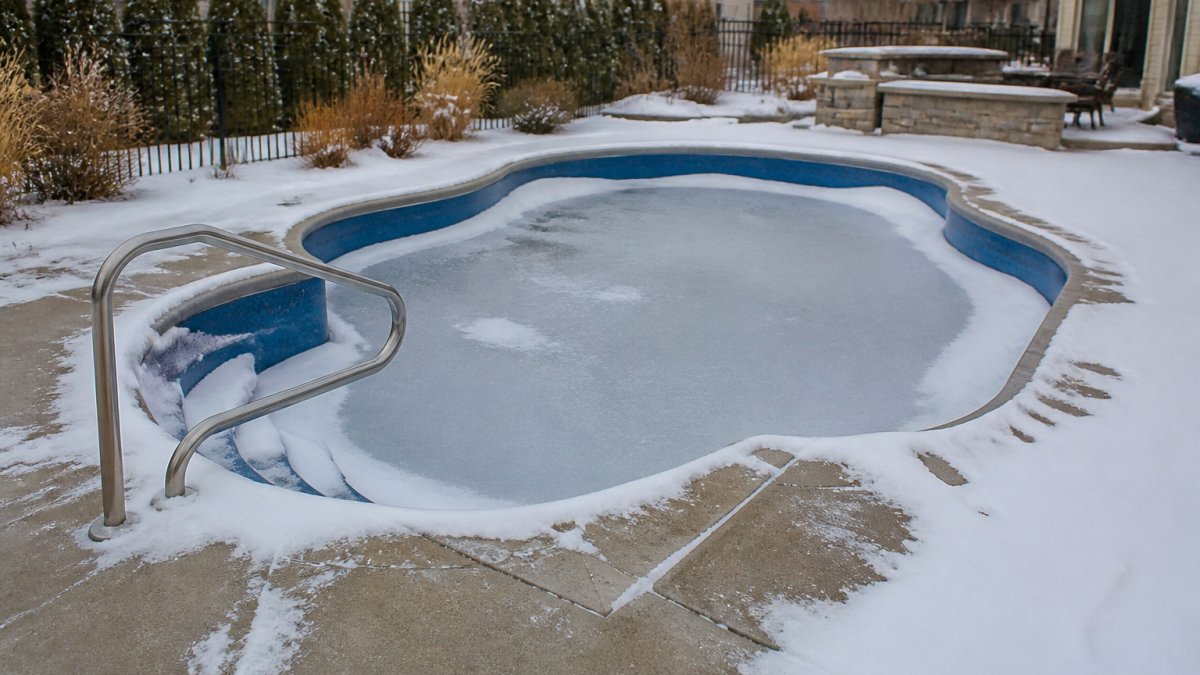
Here's what happens: When water in and around the pool freezes, it pushes outward. A rigid concrete pool cracks under this pressure.
The real risk isn't the freeze itself, it's the thaw cycle. When soil thaws unevenly, it settles differently in different areas.
What matters most:
- Proper drainage around the pool during installation
- High-quality backfill material, not native clay
- A pool cover during winter months to reduce temperature swings
- Professional site preparation that accounts for local soil conditions
The fiberglass shell itself won't crack from cold. Poor drainage and uneven ground settlement will.
Fiberglass vs. Concrete Pool: Which Handles Local Conditions Better
This comparison matters because concrete and fiberglass are the two most durable inground pool options, and both can work in Northeast Ohio, but they fail for different reasons.
Concrete pools:
- Extremely rigid, which means they crack under freeze-thaw stress
- Require resurfacing every 7-10 years in this climate
- More expensive long-term due to maintenance and repairs
- Better for custom shapes and sizes
- Heavier initial construction footprint
Fiberglass pools:
- Flexible shell absorbs some ground movement
- Minimal surface maintenance over 20+ years
- Faster installation with less site disruption
- Limited shape options
- Lower lifetime maintenance cost
When asking is a fiberglass pool good for northeast in Ohio, the answer on durability in freeze-thaw conditions is yes, fiberglass wins over concrete. Concrete wins on customization. If you want a standard rectangular or freeform pool and you're willing to accept the maintenance burden, concrete works.
We recommend custom in-ground pools from Howland Pools to homeowners who want to evaluate options, with guidance on which suits their specific soil and drainage conditions.
Fiberglass Pool Installation: Timeline and Site Preparation
A fiberglass pool is a single molded shell that arrives on a flatbed and gets lifted over your house or through your side yard. That physical reality drives most of the installation risk in this region, and it is the part most articles skip.
Typical timeline (permit approval to first swim):
- Site assessment and permits: 2-4 weeks
- Excavation and ground prep: 3-7 days
- Shell delivery and placement: 1-2 days
- Plumbing and electrical hookup: 3-5 days
- Backfill and initial water fill: 1-2 days
- Decking, landscaping, and finishing: 2-4 weeks
- Total: 6-12 weeks
Access and delivery constraints, check these before you sign:
- The shell typically arrives on a 40-53 ft flatbed. Your street, driveway, and side yard must accommodate it.
- A crane or boom truck is often needed to lift the shell over the house or fence line. Overhead power lines, tree canopy, and fence placement all matter.
- If access is tight, the crew may need to remove a fence section or use a smaller shell. Both affect cost and design.
- Confirm the delivery route with your municipality, some neighborhoods restrict heavy trucks or require permits for street closures.
Groundwater and drainage:
- A high water table is common in low-lying areas and near creeks. If groundwater sits above the pool's base, the installer must design a dewatering and perimeter drain system before the shell goes in.
- In clay-heavy soil, water perches rather than drains. A French drain or sump system around the shell is not optional, it is what protects the gel-coat from hydrostatic stress.
- Never set a fiberglass shell on native clay without a compacted gravel base. The shell needs uniform support; voids under the floor lead to flex cracks.
Utilities and permitting:
- Call 811 before excavation so gas, electric, water, and fiber lines are marked.
- Most jurisdictions require a building permit, an electrical permit for the pump and light, and sometimes a separate plumbing or grading permit.
- Setbacks from property lines, septic fields, and easements vary by municipality, confirm before design, not after excavation.
Backfill, the step that decides long-term performance:
- Backfill should be clean gravel or crushed stone, placed in lifts and compacted, not native clay pushed back in.
- Water is added to the shell as backfill rises so internal and external pressure stay balanced. Skipping this step can distort the shell.
- Poor backfill is the most common cause of shell settlement, gel-coat cracks, and deck separation two to five years after installation.
The timeline for backyard pool construction shifts with weather, permit backlogs, and site access. Our team at Howland Pools walks your property for access, drainage, and utility conflicts before quoting, so the schedule you get is the schedule you can hold.
Fiberglass Pool Cost: Initial Investment and Lifetime Ownership
Here are some cost considerations, with assumptions stated so you can adjust them to your own backyard.
Assumptions used in this comparison:
- Pool size: 16 ft x 32 ft, approximately 400 sq ft surface area, 3.5-5 ft depth
- Ownership period: 20 years
- Swimming season: Memorial Day through Labor Day (roughly 14-15 weeks), which is realistic for this region
- Equipment package: variable-speed pump, cartridge filter, gas heater, LED light
- All figures are typical U.S. market ranges as of 2026 and will vary by site, dealer, and equipment tier
Upfront installation cost ranges (installed, including standard decking and equipment):
- Fiberglass: roughly $45,000-$85,000 depending on shell size, site access, and decking square footage
- Vinyl liner: roughly $35,000-$65,000
- Concrete (gunite/shotcrete): roughly $60,000-$110,000
Recurring and lifecycle costs over 20 years:
| Cost category | Fiberglass | Vinyl liner | Concrete |
|---|---|---|---|
| Surface renewal | Gel-coat touch-ups, often $500-$1,500 per repair as needed | Liner replacement every 6-10 years, roughly $4,000-$7,000 each | Resurfacing every 7-10 years, roughly $6,000-$12,000 each |
| Chemicals (annual) | Roughly $300-$600 | Roughly $400-$700 | Roughly $500-$900 |
| Equipment replacement | Pump/filter every 10-15 years, roughly $1,500-$3,000 per cycle | Same | Same |
| Heating (annual, gas) | Roughly $800-$2,000 depending on cover use and setpoint | Similar | Similar, often higher due to greater surface area and depth |
| Structural repairs | Low if drainage is correct; high if it is not | Moderate | Moderate to high in freeze-thaw soils |
What the 20-year totals look like:
- Fiberglass: roughly $60,000-$110,000 all-in
- Vinyl liner: roughly $65,000-$120,000 (two to three liner replacements dominate)
- Concrete: roughly $90,000-$160,000 (two resurfacing cycles plus patching)
These are ranges, not quotes. The single biggest swing factor is site conditions, poor drainage or clay-heavy soil can add to the cost of any pool type.
Where the money actually goes wrong:
- Skipping a perimeter drain in clay soil can lead to shell stress and gel-coat repairs.
- Undersized equipment raises heating and chemical costs every season
- No winter cover means higher spring cleanup and chemical shock costs
For a line-item breakdown of what drives your specific number, see the cost of custom inground pools guide. The key is to compare total 20-year cost, not sticker price.
Maintenance and Durability: What to Expect Year-Round
Fiberglass requires less maintenance than other pool types, but you still need to follow a routine to keep the gel-coat surface in good condition and prevent algae growth.
Year-round maintenance:
- Test water chemistry weekly during swimming season
- Brush the pool surface weekly to prevent algae buildup
- Clean the filter regularly (frequency depends on usage)
- Run the pump 8-12 hours daily during summer
- Cover the pool during winter months
- Inspect for visible cracks or damage annually
Winter care in Northeast Ohio:
- Lower water level slightly to prevent overflow during freeze-thaw
- Use a winter cover to reduce debris and temperature swings
- Don't drain the pool completely (the shell needs water weight for stability)
- Run the pump occasionally on very cold days to prevent ice damage to equipment
Durability expectations:
- Gel-coat surface: 15-20 years before visible wear
- Fiberglass shell: 25-30+ years with proper care
- Structural integrity: minimal degradation if drainage is adequate
The key to long fiberglass pool life in this climate is preventing water from sitting around the shell and managing freeze-thaw stress through proper winterization.
Starting Your Custom Pool Project
If you're considering a fiberglass pool for your Northeast Ohio property, the first step is understanding your specific site conditions. Soil type, drainage, and ground slope all affect whether fiberglass is the right choice and how much the project will cost.
Howland Pools offers a free consultation where we assess your backyard, discuss your vision, and explain which pool type makes sense for your situation. We handle the entire process from design through installation, including permits, site prep, and all finishing work.
When you're ready to move forward, get a custom quote for your project. We'll walk you through the timeline, budget, and what to expect during construction.
Frequently Asked Questions
Is a fiberglass pool cheaper than concrete?
Fiberglass pools can have different upfront costs compared to concrete pools, and maintenance expenses over time can also vary. Concrete pools may demand regular resurfacing, acid washing, and higher chemical balancing costs. However, total ownership cost depends on your installation timeline, site conditions, and how long you plan to own the pool. Request a detailed quote to compare options for your specific backyard.
Is a fiberglass pool suitable for Northeast Ohio winters?
Fiberglass pools can work in Northeast Ohio, but freeze-thaw cycles and clay-heavy soil present challenges. The fiberglass shell's flexibility helps it resist cracking better than concrete when ground shifts during freeze-thaw, but improper drainage and groundwater pressure can still cause structural problems. Proper site preparation, drainage systems, and winterization are essential. Consult a local pool builder who understands Northeast Ohio climate and soil conditions before committing.
How much maintenance does a fiberglass pool require?
Fiberglass pools require less maintenance than concrete pools. You'll need regular water chemistry monitoring, occasional brushing to prevent algae, and seasonal equipment checks. The smooth gel coat surface resists algae growth better than concrete, reducing cleaning time. However, Northeast Ohio's seasonal changes mean you'll need spring startup procedures and fall winterization. Budget time for monthly testing and occasional repairs if the gel coat develops cracks or staining.
What site conditions should I consider before installing a fiberglass pool?
Soil type, groundwater levels, and drainage are critical in Northeast Ohio. Clay-heavy soil common to the region can trap water and create hydrostatic pressure against the pool shell. High water tables increase installation complexity and risk. Excavation depth, proximity to trees and utilities, and backyard size all affect feasibility and cost. A professional site assessment identifies these constraints before construction begins, preventing costly delays or structural problems.
A fiberglass pool is a strong choice for Northeast Ohio if your site has good drainage and you want low-maintenance performance through freeze-thaw cycles. The upfront investment is real, but the long-term durability and minimal maintenance make it worth considering. Contact Howland Pools for a site assessment and custom proposal, we'll help you decide if fiberglass is right for your backyard and show you exactly what your project will look like.