7 Saltwater vs Chlorine Pool System Facts to Know
Last Updated: November 8, 2026
Quick Summary
A saltwater pool is not chlorine-free; it uses a salt chlorine generator to convert dissolved salt into chlorine continuously, so both systems sanitize with the same free chlorine. The real choice comes down to maintenance preference and budget, not water safety.
- Salt systems cost more upfront for the generator and cell but less month to month on chemicals.
- The salt cell has a finite life and is the largest recurring cost unique to a salt system.
- Salt pools still require regular testing of chlorine, pH, alkalinity, stabilizer, hardness, and salt.
- A conversion adds a generator and salt without changing the pool shell, plumbing, or filter.
- Saltwater pools carry higher corrosion risk for metal fixtures when pH and salt levels run high.
Table of Contents
- Saltwater vs Chlorine Pool Systems Pros and Cons at a Glance
- How a Salt Chlorine Generator Works
- Saltwater Pool System Cost: Upfront and Ongoing
- Saltwater Pool Maintenance and Water Chemistry Targets
- Water Feel, Skin, Eye, and Hair Comfort
- Sanitizing Effectiveness Against Bacteria, Viruses, and Algae
- Saltwater Pool Conversion: What Changes and What Doesn't
- Planning Your Pool System with Howland Pools
- Frequently Asked Questions
Saltwater vs Chlorine Pool Systems Pros and Cons at a Glance
Saltwater and chlorine pools both sanitize with chlorine. That single fact reframes the entire saltwater vs chlorine pool systems debate. A saltwater pool is not a chlorine-free pool; it is a pool that makes its own chlorine from dissolved salt. The honest answer usually comes down to maintenance preference and budget, not water safety.
Here is the short version before we get into the details:
| Factor | Saltwater Pool | Traditional Chlorine Pool |
|---|---|---|
| How it sanitizes | Salt cell generates chlorine | You add chlorine directly |
| Upfront cost | Higher (generator equipment) | Lower |
| Ongoing chemical cost | Lower | Higher |
| Routine effort | Less frequent shocking | More frequent dosing |
| Water feel | Softer, less chlorine smell | Can feel harsher |
| Equipment wear | Corrosion risk if chemistry drifts | Standard wear |
How Saltwater and Traditional Chlorine Systems Sanitize Water
Both systems rely on the same sanitizer: free chlorine. The difference is delivery. A traditional pool gets chlorine from tablets, granules, or liquid chlorine poured or fed into the water. A saltwater pool uses a salt chlorine generator to convert dissolved salt into chlorine continuously.
That means the sanitization job is identical. Free chlorine attacks bacteria, viruses, and algae in the water either way. What changes is how much chemical handling you do and how carefully you watch the chemistry. Many homeowners find the salt route easier on their hands and noses, but it is not maintenance-free. Assuming a saltwater pool means you can ignore water chemistry is a costly mistake.
How a Salt Chlorine Generator Works
A salt chlorine generator is an inline device that passes pool water over electrically charged plates, called a salt cell, and converts dissolved salt into chlorine. The salt level stays fairly stable because the chlorine converts back to salt as it sanitizes, so you rarely add salt after startup.
The cell has a fixed life and needs periodic cleaning and eventual replacement. Output is adjustable, so you can dial chlorine production up during heavy swim weeks and down in cool weather. In practice, this means less lugging of jugs and tablets, but you still test the water and still balance pH, alkalinity, and stabilizer. The generator handles chlorine production, not the whole chemistry picture.
Saltwater Pool System Cost: Upfront and Ongoing
A saltwater pool system costs more upfront because of the generator and cell, and less month to month because you buy salt instead of chlorine products. The useful way to compare is not the sticker price of either system but the total cost of ownership over the years you plan to keep the pool. Below is the framework we use in consultations, with sample figures and the assumptions behind them so you can substitute your own.
Upfront equipment. The salt chlorine generator, controller, power supply, and cell, is the added line item on a salt build. Pricing depends on pool size, equipment choice, and installation details, so request a quote from Howland Pools for current figures.
Ongoing chemicals. A traditional pool buys chlorine continuously, tablets, granules, or liquid, plus shock and algaecide. A salt pool buys salt (usually a few bags at startup and rarely after), plus muriatic acid or pH reducer, stabilizer, and occasional shock. Annual chemical spend on a salt pool can run lower than on a traditionally chlorinated pool, though the difference depends on pool use and climate.
Electricity. The cell draws power while producing chlorine. It is a small but real line item, and it rises with pump run time and output setting. Factor it in rather than treating the generator as free chlorine.
Cell replacement. This is the line item owners forget. A salt cell has a finite life measured in producing hours, and replacement is the single largest recurring cost unique to a salt system. Cell life depends on run time, water chemistry, and cell size, so plan for eventual replacement. Build that into a sinking fund from day one.
Labor. If you pay for pool service, salt systems often reduce the frequency of chemical dosing visits but do not eliminate testing, balancing, or cell cleaning. Do not assume a service bill drops to zero.
A sample multi-year view. Compare the total cost of ownership for each system over the years you plan to keep the pool, including generator installation, chemicals, electricity, and eventual cell replacement. The crossover point depends on your chemical prices, bather load, and how long the cell lasts, so use your own quotes rather than a blanket claim that salt saves money.
Budgeting only for installation and forgetting cell replacement years later is a common planning mistake, and it can erase the perceived savings.
For a fuller picture of what drives total project cost, see our cost of custom inground pools guide. If budget surprises are your worry, our breakdown on how to avoid budget overruns on pool projects walks through line-item planning and contingencies.
Replacement Cells and Equipment Lifespan
The salt cell is the part that wears out first. Its life depends on run time, output setting, water temperature, and how well you keep scale off the plates. Expect to replace it periodically and factor that replacement into your long-term budget. Generators, pumps, filters, and heaters also have service lives. Budgeting only for installation and forgetting the cell replacement that comes years later is a mistake to avoid. Build that into your plan from day one, and keep records of cell hours and cleaning so you can predict the replacement rather than be surprised by it.
Saltwater Pool Maintenance and Water Chemistry Targets
Saltwater pool maintenance involves less chemical handling but still requires routine testing. Test free chlorine, pH, total alkalinity, cyanuric acid (stabilizer), calcium hardness, and salt level on a regular schedule, and adjust as needed. Keep stabilizer in range so sunlight does not burn off chlorine, and watch pH because it drifts and affects both comfort and equipment.
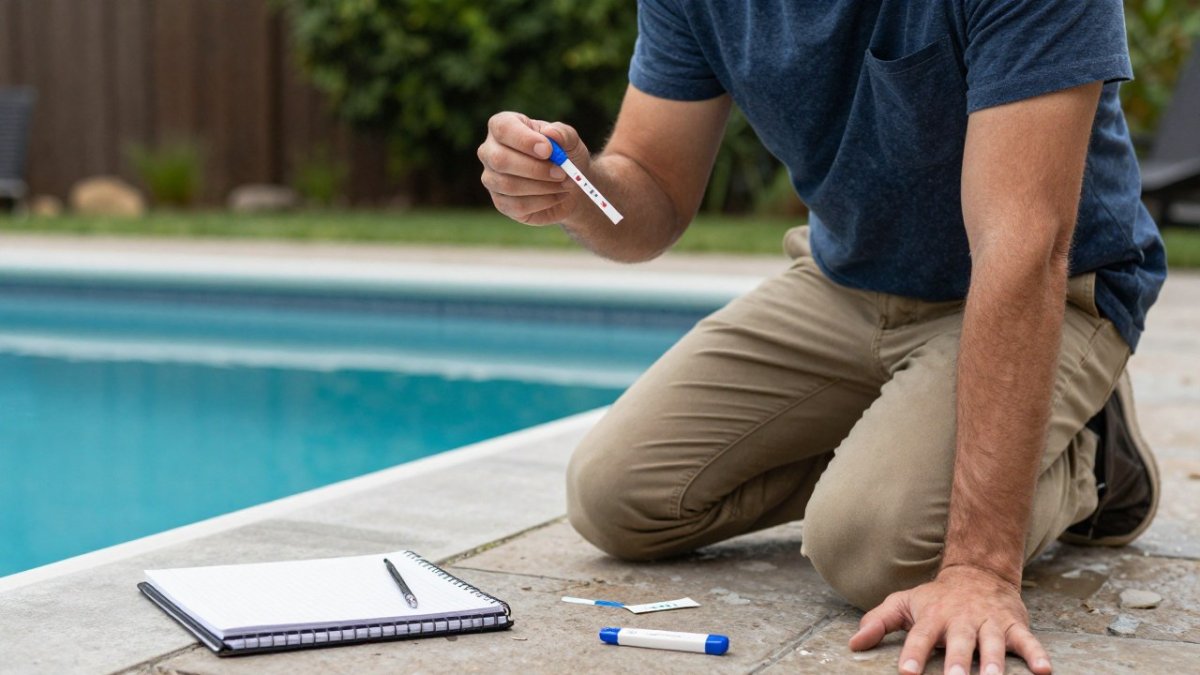
A salt pool still needs occasional shocking, can develop algae if chlorine drops, and needs the cell cleaned when scale builds up. The routine is simpler, not absent. Test strips or a liquid kit work fine; consistency matters more than the tool.
Water Feel, Skin, Eye, and Hair Comfort
Many swimmers describe saltwater as feeling softer on the skin. The reason is chemistry, not magic: a well-balanced salt pool often runs with steadier chlorine levels and less of the combined chlorine that causes the classic "pool smell" and irritation. That smell is a chemistry problem, not proof of too much chlorine.
Hair dryness and skin irritation usually trace back to unbalanced water, not salt itself. Keep pH and chlorine in range and most comfort complaints fade. If your water feels harsh, test before you blame the system.
Sanitizing Effectiveness Against Bacteria, Viruses, and Algae
Both systems use free chlorine as the sanitizer, and effectiveness depends on keeping free chlorine in range and maintaining balanced chemistry. Effectiveness depends on keeping free chlorine in range, controlling cyanuric acid, and staying ahead of algae with consistent testing and brushing.
The CDC guidance on healthy swimming and pool water makes the point clearly: proper chlorine levels are what protect swimmers, regardless of how the chlorine gets into the water. Skip testing and both systems fail. Stay on top of chemistry and both perform well.
Saltwater Pool Conversion: What Changes and What Doesn't
A saltwater pool conversion adds a generator and salt to an existing pool; it does not change the pool shell, plumbing layout, or filter. What changes is your chemical routine and the addition of the cell. What stays the same is the need for balanced water and regular testing.
Corrosion, Scale, and Material Compatibility
Salt and chlorine both put stress on materials if chemistry drifts. Saltwater pools carry a higher corrosion risk for metal fixtures, ladders, and equipment when pH and salt levels run high, and scale can build on the cell. Choose finishes and fixtures that suit a salt pool. Our guide on choosing a pool finish that lasts compares plaster, quartz, pebble, and tile so you can match surface to system.
Planning Your Pool System with Howland Pools
The right system is the one that fits your yard, your budget, and how much upkeep you want to handle. We design and build custom inground liner and concrete pools, spas, and complete outdoor living spaces entirely in-house, so the pool, patio, and surroundings are planned as one project. You can see the pool types and systems we build before you decide, and when you are ready, request a quote for your own pool. A free consultation is the simplest next step.
The choice between saltwater and chlorine comes down to how you want to spend your time and money, not which water is "better." Get the system matched to your property and your routine, and either one will serve your family well for years.
Whichever system you lean toward, the real work is matching equipment, finishes, and layout to your yard and how you actually swim. Howland Pools designs and builds custom inground pools, spas, and full outdoor living spaces start to finish with one team, and we offer a free consultation to map out your project. Get started with Howland Pools and build a backyard that fits your family and your budget.
Frequently Asked Questions
Are saltwater pools better for you than chlorinated pools?
Both types sanitize with chlorine, so the health comparison is closer than it looks. A saltwater pool generates chlorine on site, and some swimmers find it more comfortable on skin and eyes, though sensitivities vary by person. Sensitivities vary by person. Neither system removes the need for balanced pH, alkalinity, and cyanuric acid, and poor balance causes most of the irritation people blame on chlorine itself.
What is the downside of a saltwater pool?
The salt cell is the main one. It needs periodic cleaning, has a limited service life, and replacement is the largest recurring cost in a saltwater pool system. Saltwater is also mildly corrosive to certain metals, stone, and decking materials, so material selection matters during design. Finally, a generator cannot fix bad water chemistry on its own; you still test and balance pH, alkalinity, stabilizer, and calcium hardness on a routine schedule.
Is it cheaper to have a saltwater pool or a chlorine pool?
Upfront, a saltwater pool costs more because of the generator and salt cell. Ongoing chemical costs depend on pool size and usage, and the cell will eventually need replacement. Chlorine pools have lower equipment cost and cheaper repairs but steady spending on tablets or liquid chlorine. Which wins depends on pool size, usage, climate, and how long you keep the pool, so ask for a lifecycle breakdown rather than comparing sticker prices alone.
Can you convert a chlorine pool to a saltwater system?
Yes, in most cases. Conversion means adding a salt chlorine generator and cell, raising the salt level to the manufacturer's target, and confirming that pumps, heaters, ladders, and handrails are compatible with saltwater. Existing equipment often works fine, but older metal components may need inspection. After conversion you stop routine tablet feeding and shift to testing salt level, free chlorine, pH, and stabilizer. A pool professional can confirm whether your pool's materials and equipment suit the switch.