How to Choose a Pool Finish That Lasts and Looks Right
Last Updated: November 4, 2026
Quick Summary
To choose a pool finish, start with how you'll use the pool rather than a color swatch: who swims, how deep and hot the pool runs, and how much upkeep you want. Then match one of the five common types, plaster, quartz, pebble, glass bead, or tile, to your budget, comfort, and ownership horizon. View samples wet and in real pools before committing.
- Plaster is the softest, lowest-cost finish and generally needs resurfacing sooner than the others.
- Quartz mixes quartz aggregate into plaster for a harder, more stain-resistant surface with a smooth feel.
- Pebble is the most durable cement-based option but its exposed aggregate texture is rough underfoot.
- Light finishes make it easier to spot a swimmer, so favor them with young children or older swimmers.
- Rushing the cure is the most common way a new finish gets ruined during the startup window.
Table of Contents
- Start With How You'll Use the Pool, Not the Swatch
- The Main Types of Pool Finishes and What Each One Does
- A Side-by-Side Pool Finishes Comparison
- Pebble vs Quartz Pool Finish: Which Aggregate Fits Your Budget and Feel
- How Finish Color Changes Water Color and the Best Colors for Pool Safety
- Installation Quality, Curing, and the Startup Window That Decides Longevity
- Lifecycle Cost, Repairs, and the Questions to Ask Before You Sign
- Book a Free Consultation to Match a Finish to Your Backyard
- Frequently Asked Questions
Start With How You'll Use the Pool, Not the Swatch
Most homeowners start with a color chip. That's the wrong end of the decision.
Learning how to choose a pool finish means answering three questions first:
- Who swims? Young kids, older adults, and lap swimmers all have different grip and comfort needs.
- How deep and how hot? A shallow play pool and a deep diving pool show color very differently.
- How much upkeep do you want? Some finishes hide dirt. Others show every mark.
A pool finish is the final interior surface of the pool shell, and it does two jobs at once. It protects the structure underneath and sets the look of the water.
Get the order right and the swatch becomes an easy last step. Get it wrong and you'll fight the surface for years.
The Main Types of Pool Finishes and What Each One Does
There are five common types of pool finishes: plaster, quartz, pebble and aggregate, glass bead, and tile. Each one trades cost against feel, lifespan, and looks.
Plaster is the traditional choice. It's a cement-based pool plaster. White plaster gives that classic bright look.
Quartz finish mixes quartz aggregate into the plaster.
Pebble finish uses river pebbles or similar aggregate.
Glass bead finish blends tiny glass beads into the mix. It reflects light, feels smoother than pebble, and holds color well.
Tile finish covers the whole interior in ceramic or glass tile.
Want to see how these finishes sit inside a full build? Howland Pools designs and builds custom in-ground liner and concrete pools, spas, and complete outdoor environments entirely in-house.
A Side-by-Side Pool Finishes Comparison
Here's the pool finishes comparison most guides skip: matching each surface to a real owner, with the numbers that actually drive the decision.
| Finish | Feel | Typical Lifespan | Upfront Cost Tier | Upkeep | Best For |
|---|---|---|---|---|---|
| Plaster | Smooth, softest | 7-12 years | Lowest | Highest, needs brushing and rebalancing | Tight budgets, rental or flip properties |
| Quartz | Smooth with fine speckle | 10-15 years | Moderate | Moderate | Most families, everyday use |
| Pebble | Rough, exposed aggregate | 15-20+ years | Highest of cement-based | Low | Long-term owners, high-traffic pools |
| Glass bead | Smooth, reflective | 12-18 years | Moderate to high | Moderate | Light and shimmer, mid-range builds |
| Tile | Smooth, grout lines | 15-25 years with care | Highest | Moderate, grout needs attention | Design-focused and luxury builds |
Notice the pattern. Each surface trades upkeep, feel, and longevity against the others. There's no free win, only a trade you can live with.
Watch out: Proper water chemistry and startup care are important to how long any pool surface lasts.
The trade-offs behind the table
- Plaster is the traditional cement-based surface and the most affordable to install, but it is the softest and most prone to staining and etching. Colored plaster adds pigment for a softer tone but can mottle as it ages.
- Quartz mixes quartz aggregate into the plaster, making it harder and more stain-resistant than plain plaster while keeping a smooth feel and fine speckled color.
- Pebble uses river pebbles or similar aggregate and is the most durable cement-based option, but the exposed texture is genuinely rough underfoot and harder to patch invisibly.
Want to see how these finishes sit inside a full build? Howland Pools designs and builds custom in-ground liner and concrete pools, spas, and complete outdoor environments entirely in-house.
How to read the table for your situation
Don't pick the row with the best single attribute. Score each finish against four priorities and see which one wins on the most rows that matter to you:
- Budget tolerance, can you absorb resurfacing sooner, or do you need the longest gap between replacements?
- Comfort tolerance, will bare feet, knees, and kids' hands be on the surface daily?
- Maintenance appetite, are you willing to brush and test chemistry weekly, or do you want a surface that hides neglect?
- Ownership horizon, if you'll sell within five years, upfront cost dominates; if this is your forever pool, lifecycle cost does.
A family with young kids and a long ownership horizon often considers quartz. A long-term owner with a high-traffic pool and a tolerance for texture might consider pebble. A design-led build often leans toward tile. The table doesn't make the choice for you, it shows you which trade you're actually accepting.
Pebble vs Quartz Pool Finish: Which Aggregate Fits Your Budget and Feel
The pebble vs quartz pool finish question usually comes down to two things: how the surface feels and how long you plan to stay.
Quartz is the middle path. It's smooth like plaster but tougher, and it holds up well against everyday family use.
Pebble wins on lifespan. The exposed aggregate resists wear and staining better than any plaster-based surface. But that texture is real.
In general, quartz suits comfort-focused owners, and pebble suits owners who prioritize longevity over a soft touch.
How Finish Color Changes Water Color and the Best Colors for Pool Safety
Finish color strongly influences water color. A light finish bounces light back and gives you bright blue water. A dark finish absorbs light and pushes the water toward deep blue, teal, or even gray-green. But the color you see in a showroom is not the color you'll see in your backyard, and that gap is where most finish regrets start.
Here's the simple rule:
- White and light plaster: bright, classic blue water
- Blue pigment: deeper, richer blue
- Gray and green tones: natural, lagoon-style water
Why the same finish looks different in every yard
Water color is a product of the finish, the water depth, the sky, the surrounding hardscape, and the time of day. A medium-blue quartz that looks rich on a sample board can read almost black in a shaded pool surrounded by dark pavers, and the same finish can look pale and washed out under full afternoon sun. Depth compounds it: a shallow play pool shows the finish color more directly, while a deep end absorbs light and darkens the water.
How to visualize the finished pool before you commit
This is the step most guides skip, and it's the one that prevents expensive second-guessing:
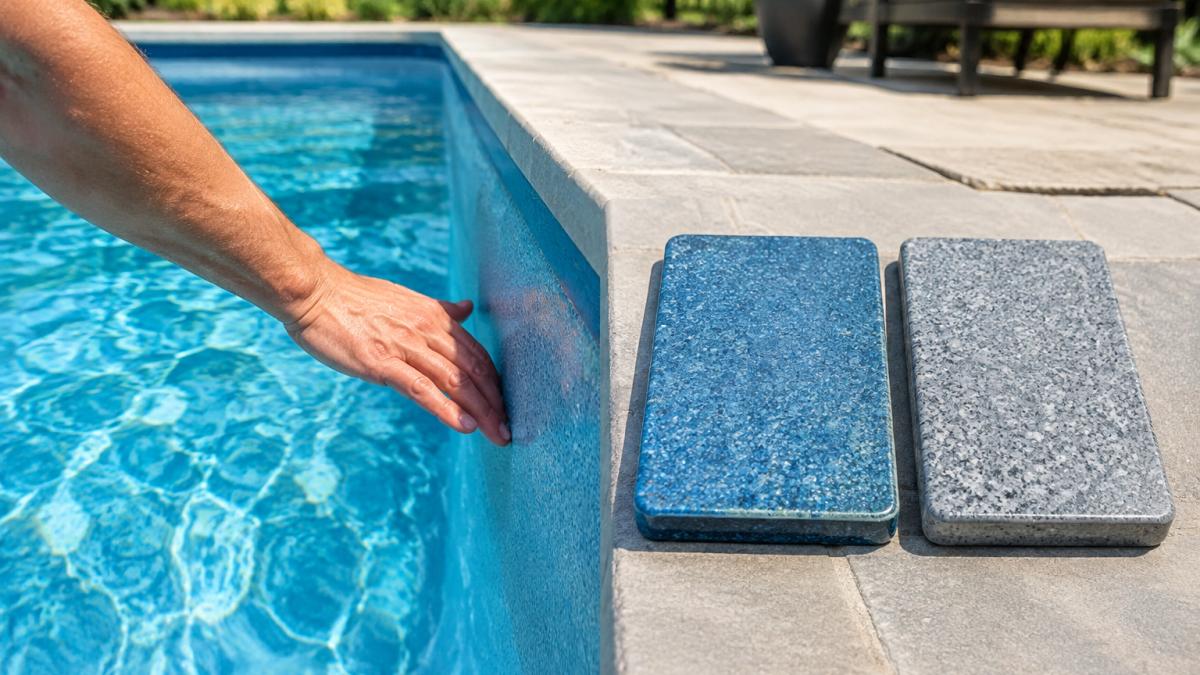
- Ask to see the finish in a real pool, not just a swatch. Ask any builder you're considering to show completed pools using the finish you're considering, and view them at the time of day you'll actually swim.
- View samples wet, not dry. Finish color shifts dramatically when submerged. Ask to see a sample submerged in a bucket of water, or better, a small finished sample tile.
- Look at the sample under your own lighting. Take a sample board home and view it in morning, midday, and evening light against your actual deck and landscaping.
Watch out: Choosing a finish from a photo on a phone screen is the most common source of color regret. Screens distort color, and photos are usually taken in ideal light that your yard may never reproduce.
The best colors for pool safety
On safety, contrast is what counts. The best colors for pool safety keep the pool floor and walls visibly different from the surrounding deck. Light finishes generally make it easier to spot a swimmer or an object below the surface.
If you have young children or older swimmers, favor a lighter finish and add a contrasting tile line at the waterline. It's a small design choice with a real payoff.
A quick color decision framework
- Want the classic look and maximum visibility? White or light plaster.
- Want richer blue without going dark? Medium-blue quartz or glass bead.
- Want a natural, lagoon feel? Gray or green-toned aggregate.
Match the color to how the pool will be used and viewed, not to the swatch that photographs best.
Installation Quality, Curing, and the Startup Window That Decides Longevity
A great finish applied badly still fails. Installation quality, curing, and the first weeks of startup decide how long any surface lasts.
Watch out: rushing the cure is the most common way a new finish gets ruined. Fresh plaster and aggregate need controlled fill and balanced water from day one.
The startup window matters because new surfaces are still settling.
Before you sign with anyone, know what separates a careful installer from a fast one. Use this pool builder checklist to hire with confidence, and see the construction process behind a Howland Pools build, where one team handles the pool, patio, and startup.
Lifecycle Cost, Repairs, and the Questions to Ask Before You Sign
Upfront cost is only half the story. A cheap finish that needs resurfacing early can cost more over time than a pricier surface that lasts.
Repairability matters too. Plaster and quartz can be patched and blended. Pebble repairs are trickier to match. Tile can be replaced in sections, but color batches vary over time.
Ask these before you sign:
- How long should this finish last before resurfacing?
- What does routine upkeep involve?
- How are repairs handled, and who does them?
Budget questions are fair game. Avoiding budget overruns starts with a line-item plan, so read this guide on how to avoid budget overruns on pool projects before you compare bids.
Book a Free Consultation to Match a Finish to Your Backyard
Choosing a finish is easier when you can see it in your own space. Howland Pools offers a free consultation.
Howland Pools designs and builds pools, spas, patios, enclosures, and outdoor kitchens as one cohesive project, handled start to finish by one team.
Get started with Howland Pools and book a free consultation to turn your backyard into the retreat you've been planning.
Frequently Asked Questions
What type of pool finish is best?
There is no single best pool finish because the right choice depends on your budget, how rough you want the surface, and the look you want. Plaster is the most affordable and gives a smooth, classic white or colored surface. Quartz adds hardness and a subtle sparkle. Pebble and glass bead finishes cost more but last longer and hide wear better. Tile suits accents and waterline details. Match the finish to your use, climate, and maintenance willingness rather than picking the most expensive option.
Which pool finish is better, quartz or pebble?
Quartz and pebble both use aggregate, but they feel and age differently. Quartz finishes have finer, smoother particles, so they feel softer underfoot and cost less upfront. Pebble finishes use larger river stones, giving a textured surface that resists wear and lasts longer, but the rougher feel can bother tender feet and knees. For families with young children or older swimmers, quartz is often the more comfortable pick. For high-traffic pools where longevity matters most, pebble is worth the extra cost.
How does pool finish color affect water color?
The finish acts as the backdrop for the water, so its color shifts what you see. White plaster reflects light and produces bright, classic blue water. Light gray and tan finishes create softer, more natural tones. Dark blue, green, and black finishes absorb light and give deep, dramatic water that can look almost emerald or lagoon-like. Keep in mind that dark finishes show dirt, leaves, and scale more readily, and they can make the pool look shallower. Bring finish samples to the site and view them in sunlight before deciding.
What should I ask a pool builder before choosing a finish?
Ask which finishes the builder installs most often, how they prep and cure the surface, and what the startup care involves. Request addresses or photos of local pools with the finish you are considering so you can see it after a few seasons. Confirm who handles warranty claims and whether the finish and installation are covered together. Also ask how the finish performs with your water source and whether any local water chemistry issues affect the choice. A builder who answers these plainly is easier to trust with the whole project.