How to Avoid Budget Overruns on Pool Projects
Last Updated: November 1, 2026
Quick Summary
Avoiding budget overruns on pool projects starts with an itemized pool construction cost breakdown and a separate contingency reserve held outside the construction total. Track committed versus actual costs on every line item, and lock scope, exclusions, allowances, and a written change-order procedure into the contract before work begins.
- Build a line-item template and price every row before work begins, because blank rows become surprises later.
- Hold a tiered reserve: 5-10% design, 10-15% construction, and 5-10% owner contingency.
- Update a committed-versus-actual ledger at every payment milestone, not monthly, to catch drift while it is fixable.
- Send every contractor the same line-item template and compare totals only after scopes match.
- Set a cap on cumulative change orders, such as 10% of the contract price, above which work pauses.
Table of Contents
- Start With a Line-Item Pool Construction Cost Breakdown
- Set a Pool Building Contingency Budget Before You Sign
- Evaluate the Site So Surprises Do Not Become Overruns
- Run a Pool Contractor Estimate Comparison the Right Way
- Control Pool Construction Change Orders and Contract Protections
- Plan for Weather, Delays, and Escalation
- Account for Long-Term Operating and Maintenance Costs
- Request Your Free Consultation With Howland Pools
- Frequently Asked Questions
Start With a Line-Item Pool Construction Cost Breakdown
Most pool budget disasters start before a shovel hits the ground. They start with a single lump-sum number and no idea what sits inside it.
A pool construction cost breakdown is an itemized list of every scope item in your project, priced separately, so you can see where money goes and where it can move. It is not a quote.
What Belongs in the Line-Item Template
Build your template with these rows. Add or remove based on your design:
| Line Item | What It Covers | Risk Level |
|---|---|---|
| Design and engineering | Plans, drawings, structural details | Low |
| Permits and fees | Applications, inspections, local requirements | Low |
| Site prep and excavation | Clearing, digging, grading | High |
| Pool shell and structure | Walls, floor, liner or concrete | Medium |
| Plumbing and circulation | Pipes, skimmers, returns, pump | Medium |
| Filtration and equipment | Filter, heater, controls | Medium |
| Electrical and bonding | Wiring, bonding, lighting | Medium |
| Decking and coping | Surround, patio, edging | Medium |
| Fencing and safety | Barrier, gates, alarms | Low |
| Landscaping and finish | Sod, planting, cleanup | Low |
| Contingency | Unknowns and changes | Reserve |
Every row gets a number before work begins. Blank rows become surprises later.
How Contingency Fits Into the Numbers
Contingency is not padding. It is the line that absorbs what the site reveals. A common approach is a separate reserve held outside the construction total, released only for documented conditions. Keep it visible on the sheet, not folded into other rows, or you will spend it without noticing.
Set a Pool Building Contingency Budget Before You Sign
Sign nothing until your pool building contingency budget exists as its own number. This is the reserve that keeps a pool project from turning into a financing problem. Holding a reserve is widely recommended; the sections below explain how much to hold, where to hold it, and how to release it.
How Much Contingency to Hold
A tiered reserve, rather than one lump percentage, is a common approach to budgeting:
- Design contingency: 5-10% of the design and engineering line. Covers changes you make after drawings are final but before construction starts.
- Construction contingency: 10-15% of hard construction costs. Covers what the site reveals, rock, unstable soil, high water tables, utility conflicts.
- Owner reserve: 5-10% of the total project. Covers upgrades and add-ons you decide on mid-build.
On a $100,000 project, the tiers above would total roughly $20,000-$35,000 held outside the construction total. If that sounds high, compare it to the cost of stopping mid-build because the reserve ran dry.
Track Committed Versus Actual, Not Just Spent
The single most useful habit is a three-column ledger for every line item:
| Line Item | Committed | Actual | Remaining |
|---|---|---|---|
| Site prep and excavation | $12,000 | $9,400 | $2,600 |
| Pool shell and structure | $28,000 | $28,000 | $0 |
| Contingency (construction) | $15,000 | $3,200 | $11,800 |
Committed means signed contracts, approved change orders, and purchase orders, money you are obligated to pay even if the invoice has not arrived. Actual means paid. Remaining is your true headroom. Owners who track only paid invoices routinely believe they have more room than they do, because committed costs are already spent.
Update the ledger at every payment milestone, not monthly. A weekly or milestone cadence catches drift while it is still fixable.
Set Release Rules Before You Need Them
A reserve with no release rule becomes spendable cash by week two. Write the rule into the contract:
- Construction contingency releases only for documented site conditions, with photos, a written description, and a cost breakdown.
- Design contingency releases only for owner-requested changes after drawings are final.
- Owner reserve releases only with your written approval, and each release reduces the cap permanently.
When a tier empties, spending on that category stops until you deliberately refill it. That pause is the whole point, it forces a decision instead of a surprise.
Evaluate the Site So Surprises Do Not Become Overruns
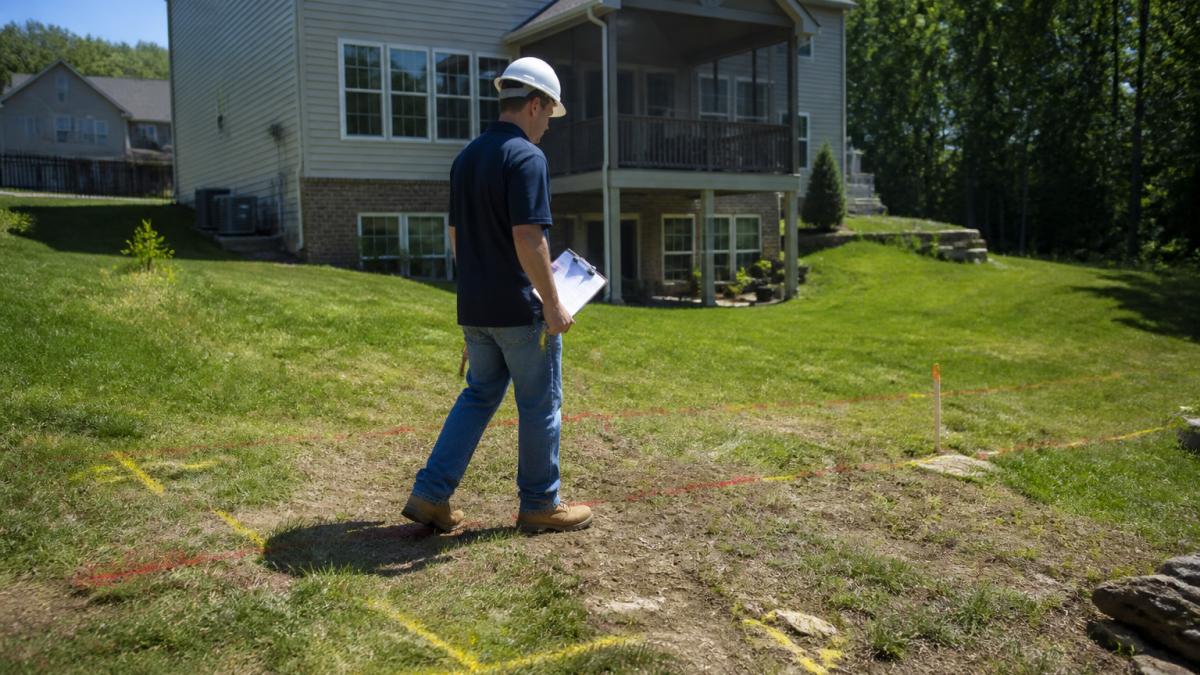
A site evaluation is a documented review of your yard's slope, soil, access, and utilities before design is locked. Skipping it is how small unknowns become big overruns.
Slope, Soil, and Excavation Costs
Slope analysis tells you how much earth must move. A flat lot is simple. A steep grade means retaining walls, extra hauling, and more excavation. Soil conditions matter just as much. Rocky ground or high water tables slow digging and add equipment time.
Ask for a written site profile. It should state grade changes, soil findings, and how each affects the cost estimate.
Drainage, Backfilling, Utilities, and Access
Water has to go somewhere. Drainage and backfilling are easy to underestimate and expensive to fix later. Utility mapping finds lines before digging, which prevents rework and damage claims. Access matters too: if a digger cannot reach the backyard, everything costs more.
Confirm these four in writing:
- Drainage plan and where water exits
- Backfill material and compaction method
- Utility locations and protection
Run a Pool Contractor Estimate Comparison the Right Way
Comparing contractor bids is not about picking the lowest number. It is about comparing the same scope line by line. A pool contractor estimate comparison only works when every bid uses the same template.
Do this:
- Send every contractor your line-item template.
- Require each bid to fill every row.
- Mark any row left blank or bundled as "unclear."
- Compare totals only after scopes match.
- Ask each contractor to explain gaps in writing.
A bid that looks cheaper usually has rows missing. If you want to see what a complete, comparable quote should include, review how to get a quote for custom pool installation before you send your template out.
Control Pool Construction Change Orders and Contract Protections
A change order is a written amendment that adjusts scope, price, or schedule after the contract is signed. Uncontrolled change orders are the single biggest driver of overruns on pool projects. The useful version is knowing exactly what the contract must contain before you sign, and what a change order must contain before you approve one.
What the Contract Must Lock Down Before Work Starts
Four clauses do most of the work. If any is missing or vague, ask for it in writing before signing:
- Scope and exclusions. The contract should state what is included and what is excluded, rock removal, haul-off, fence removal and replacement, landscaping restoration, utility relocation, permits beyond the base application. Exclusions are where "unexpected" charges are born.
- Allowances. An allowance is a placeholder dollar amount for a selection not yet made (coping, tile, decking, finishes). Every allowance needs a stated amount, what it covers, and the rule for overages, who pays the difference and whether a markup applies. A $3,000 tile allowance that becomes $9,000 at selection is a change order waiting to happen.
- Payment milestones. Tie payments to completed, inspectable milestones, excavation complete, shell poured, plumbing pressure-tested, equipment set, decking complete, final walkthrough, not to calendar dates. Hold a final payment (commonly 5-10%) until punch-list items are closed.
What Every Change Order Must State
Before you approve any change order, confirm it contains all five elements:
- Description of the added, removed, or substituted work.
- Price, a fixed amount, not a range or an estimate.
- Schedule impact, days added or removed, and whether the completion date moves.
- Reason, owner request, site condition, code requirement, or design change.
- Approval signatures from both parties, dated.
A change order missing any of these is not a change order; it is a future dispute. Decline it and ask for a complete one.
Cap the Total and Name a Decision-Maker
Two protections close the loop. First, set a cap on cumulative change orders, for example, 10% of the contract price, above which work pauses until you and the builder meet in writing. Second, name one point of contact on each side authorized to approve changes.
A proper builder checklist helps here, and you can use this pool builder checklist to vet contracts and protections before signing.
Plan for Weather, Delays, and Escalation
Weather and delays are predictable in timing even when they are unpredictable in severity. Build them into the schedule instead of reacting to them.
Add these to your plan:
- A realistic construction schedule with weather buffer days.
- A written escalation path for delays: who is told, when, and what happens next.
- A rule for who absorbs delay costs and under what conditions.
If a delay pushes past a milestone, the escalation clause should trigger a documented conversation, not a surprise invoice. For a realistic view of what adds weeks, see the backyard pool construction timeline and plan your family's summer around it.
Account for Long-Term Operating and Maintenance Costs
Construction is the down payment. Ownership is the long game. Operating costs include energy, chemicals, water, and repairs. Maintenance costs include cleaning, inspections, and equipment replacement.
Plan for these from day one:
- Energy-efficient equipment to lower running costs.
- A pool cover to cut evaporation and heating loss.
- An automated cleaner to reduce manual labor.
Regular inspections catch small problems before they become rework. Budget a yearly ownership line alongside your construction reserve so long-term ownership never blindsides you.
Request Your Free Consultation With Howland Pools
Avoiding budget overruns on pool projects depends on holding the line as the build progresses, and a single accountable team can help with that. Howland Pools designs and builds custom inground pools, spas, patios, enclosures, and outdoor kitchens, with one team managing the project from start to finish.
Book your free consultation with Howland Pools and build your backyard retreat with a team that controls the budget from day one.
Frequently Asked Questions
How much contingency should I include in a pool building contingency budget?
A common guideline is to set aside 10 to 15 percent of the base construction figure as a pool building contingency budget. Site conditions drive the number: a flat, easy-access lot may need less, while a sloped yard, rocky soil, or tight equipment access calls for the higher end. Keep contingency in a separate line so it stays visible, and treat it as money for unknowns like extra excavation or utility relocations, not for upgrades you decide on mid-build.
What unexpected costs should I plan for when building a pool?
The most common surprises come from the site, not the pool itself. Extra excavation for slope or rock, soil hauling and disposal, retaining walls, drainage corrections, utility relocation, and upgraded electrical service all show up after digging starts. Permits and inspection fees vary by jurisdiction and should be listed explicitly. A pool construction cost breakdown that names each of these lines, plus a contingency line, keeps a surprise from turning into an overrun.
How can I compare pool contractor estimates accurately?
A pool contractor estimate comparison only works when bids cover the same scope. Ask each builder to itemize excavation, shell, plumbing, equipment, finishes, decking, and permits separately, and to state what is excluded. Compare equipment by model number, not brand name, and check whether permits, cleanup, and startup are included. A lower lump sum that omits decking or electrical is not cheaper; it is incomplete, and the gap becomes a change order later.
How do design changes affect pool construction costs?
Design changes made after contracts are signed arrive as pool construction change orders, and they usually cost more than the same choice made during planning. Moving a pool after layout, adding a water feature, or upgrading finishes mid-build can trigger rework, re-inspection, and schedule delays. Settle size, shape, and finish selections before excavation. If a change is unavoidable, get it in writing with a fixed price and a schedule impact before any work proceeds.
Your pool should be a place your family enjoys, not a source of financial stress. Howland Pools builds custom inground pools and complete outdoor living spaces across Northeast Ohio, with one team handling design, construction, and every detail in between. Get started with Howland Pools and turn your backyard into the retreat you pictured, on a budget you can actually hold.