Choosing the Right Pool Decking Materials for Your Backyard
Last Updated: November 4, 2026
Quick Summary
Choosing the right pool decking means matching the material to your climate and site before comparing colors. Concrete and spraycrete cost the least, natural stone the most, and manufactured pavers sit mid-range, while wood and composite suit raised decks rather than wet, flush-to-grade surrounds.
- Freeze-thaw damage hits porous materials hardest, so dense, low-absorption surfaces perform best in hard-winter climates.
- Skipping a proper base and drainage plan is the most common cause of cracked, heaved decks in cold-winter areas.
- Manufactured pavers are the most repairable surface because individual units can be lifted and reset if the base shifts.
- Lighter travertine, light concrete and pale pavers stay cooler underfoot because color is the biggest lever on solar absorptance.
- Wood and composite are the most DIY-friendly family for raised decks but a poor fit for flush-to-grade pool surrounds.
Table of Contents
- Start With Your Climate and Site Before You Pick a Pool Decking Material
- Pool Decking Options and Costs: A Side-by-Side Breakdown
- Pool Deck Materials That Stay Cool Underfoot
- Slip Resistance, Drainage and Safety Around the Water
- Maintenance Requirements for Pool Decking by Material
- Durability, Sustainability and DIY vs. Professional Installation
- Plan Your Pool Deck With a Single Design and Build Team
- Frequently Asked Questions
Start With Your Climate and Site Before You Pick a Pool Decking Material
Choosing the right pool decking materials starts with two questions that have nothing to do with color swatches: what does winter do to your yard, and how does water move across the site? Decks often fail for reasons that are visible before the first paver goes down. The material itself may be sound; the match between material and site is what matters.
A pool deck is the hardscape surface around the water, and it has to survive more than feet. It takes splash-out, sun, snow, and the freeze-thaw cycle year after year.
Freeze-Thaw Cycles and What They Do to a Deck
Freeze-thaw damage happens when water soaks into a material, freezes, expands, and pushes the surface apart from the inside. In a climate with hard winters, that cycle repeats dozens of times each season. Dense, low-absorption materials handle it well. Porous materials that stay wet handle it badly.
Watch out: skipping a proper base and drainage plan is the most common cause of cracked, heaved decks in cold-winter areas, and it happens under every material, including expensive stone.
Pool Decking Options and Costs: A Side-by-Side Breakdown
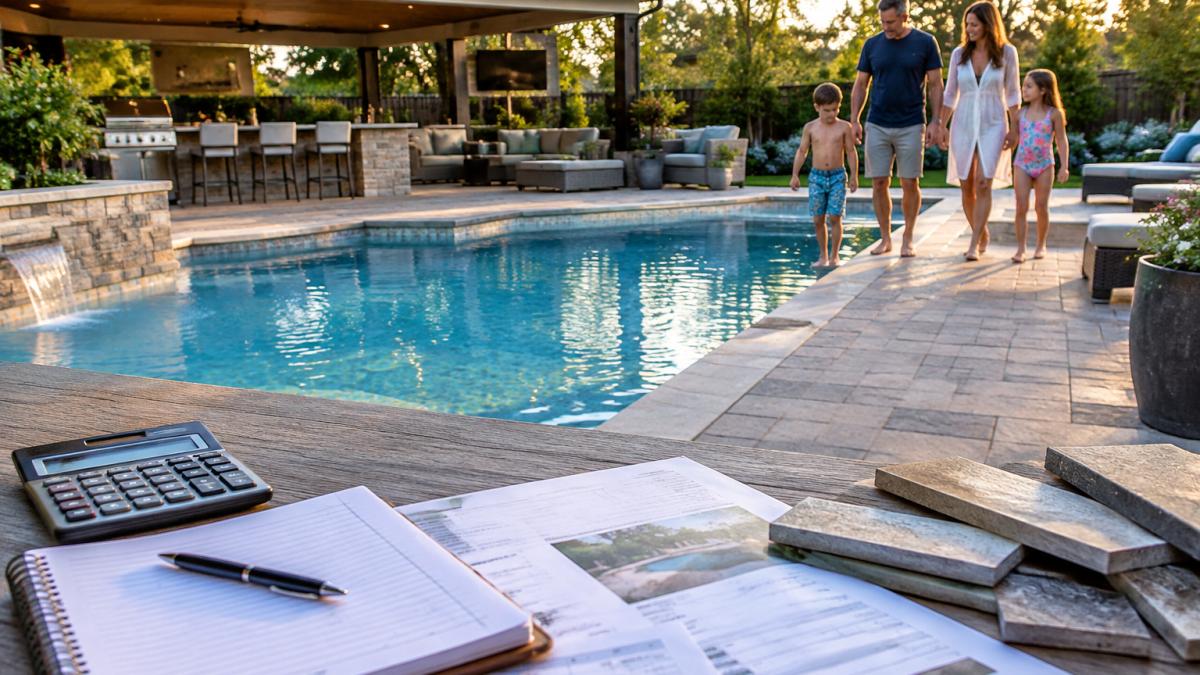
Pool decking options and costs come down to four families of material: concrete and spraycrete, natural stone, manufactured pavers, and wood or composite. To see the custom in-ground pools and outdoor environments these materials can surround, visit Howland Pools LLC. Each one lands in a different place on installed cost, upkeep, and feel underfoot, and the spread between the cheapest and most expensive option is wide enough that the choice usually comes down to budget and maintenance tolerance rather than aesthetics.
| Material | Typical Installed Cost | Best For | Watch Out For |
|---|---|---|---|
| Concrete / spraycrete | Lowest of the four families | Tight budgets, seamless look | Cracks; needs resurfacing over time |
| Natural stone | Highest of the four families | Long life, premium finish | Higher material cost, heavier install |
| Manufactured pavers | Mid-range | Repairs, freeze-thaw movement | Joint sand upkeep, weed growth |
| Wood / composite | Mid-range to high, depending on species | Warm feel, raised decks | Slipperiness, sealing, fading |
Pricing depends on quantity, dates, site access, and delivery, so for current prices or a quote, contact Howland Pools directly. For a fuller picture of where money goes on a pool project, see our guide on how to avoid budget overruns on pool projects.
Concrete, Spraycrete and Resurfacing
Poured concrete is the budget-friendly baseline and the fastest surface to install. Spraycrete, a textured concrete finish also sold as exposed-aggregate or stamped concrete, adds grip and hides surface flaws. Resurfacing an existing slab is often cheaper than a full replacement, but it only works if the slab underneath is structurally sound; a slab with active cracks or settled sections will telegraph through any new topping. Concrete is also the most DIY-friendly of the four families for a simple broom-finished slab, though decorative finishes and coping work are best left to a professional.
Natural Stone vs. Manufactured Pavers
Natural stone such as travertine offers a leathered or sandblasted finish that stays cooler and grips well, and it is the longest-lived option when installed over a proper base. Manufactured pavers cost less and can be lifted and reset if the base shifts, which makes them the most repairable surface. Both need proper drainage underneath, and both are heavy enough that base prep and bedding are professional work, this is not a weekend DIY material.
Wood and Composite Decking Varieties
Teak, ipe, and cedar bring warmth and a classic look, while composite decking needs less sealing. All wood and composite surfaces get slick when wet and need UV protection to hold their color. Wood and composite are the most DIY-friendly family for a raised deck because they use standard framing and fasteners, but they are a poor fit for a flush-to-grade pool surround where constant splash-out keeps the surface wet.
DIY vs. Professional Installation by Material
Installation approach varies by material. Base preparation, grading, and coping work are generally unforgiving of mistakes, and decks tied to a pool structure should be properly engineered and permitted. Planning the deck and pool surround together helps avoid coping misalignment at the joint.
Pool Deck Materials That Stay Cool Underfoot
Pool deck materials that stay cool share one trait: lighter color and lower heat absorption. Dark surfaces soak up sun and radiate it back at your feet. Lighter travertine, light concrete, and pale pavers stay noticeably more comfortable on a hot afternoon. Texture matters too, since a rougher surface spreads contact and feels less hot.
The mechanism is solar absorptance. A material's surface temperature in direct sun depends on how much of the sun's energy it absorbs versus reflects, and color is the single biggest lever, a dark surface can run dramatically hotter than a light one of the same material under identical sun. Thermal mass matters second: dense materials like concrete and stone hold heat and release it slowly, so they stay warm into the evening, while wood and composite have lower thermal mass and cool faster once the sun drops. In general, lighter stone and concrete tend to run cooler on a hot afternoon than darker wood, composite, or stamped concrete.
The same material can be comfortable or unbearable depending on finish and color choice, not just material family. A leathered or sandblasted travertine in a pale tone is the classic cool-underfoot pick. A dark-stained composite in full sun is the classic mistake. If you want a dark look, keep it off the main barefoot path and use a lighter coping at the water's edge.
Watch out: surface temperature is not the same as air temperature, and a deck that is comfortable at 10 a.m. can be painful at 3 p.m. in full sun, test a sample in direct afternoon sun before committing to a dark finish.
Slip Resistance, Drainage and Safety Around the Water
Slip resistance and drainage decide whether a beautiful deck is also a safe one. Wet pool decks are where most slips happen, so choose textured finishes and slope the deck away from the pool and house. Coping should grip even when soaked. Good permeability keeps standing water off the surface.
Maintenance Requirements for Pool Decking by Material
Maintenance requirements for pool decking vary more than buyers expect. Concrete may need periodic sealing and resurfacing. Stone needs cleaning and occasional re-sealing. Pavers need joint sand topped up. Wood needs sealing and insect checks, while composite needs little beyond washing. Budget time for upkeep, not just install.
Durability, Sustainability and DIY vs. Professional Installation
Durability favors dense stone and well-built concrete, and sustainability favors local stone and long-lived materials that avoid replacement. On DIY versus professional installation: base prep, grading, and coping work are unforgiving of mistakes, and a deck that fails takes the pool surround with it. Many homeowners find a professional install to be the more reliable route. You can see the full design-and-build approach on our custom pool design and construction page.
Plan Your Pool Deck With a Single Design and Build Team
The best deck choice is the one that fits your site, your climate, and your maintenance tolerance, and that decision is easier when one team handles the pool and the deck together. Splitting the work across multiple contractors can make it harder to keep coping alignment and drainage coordinated.
Before you hire anyone, run through our pool builder checklist so you know what to ask. When you're ready to plan the deck alongside the pool, request an estimate from Howland Pools and we'll walk your site with you.
Frequently Asked Questions
What is the best deck material for a pool?
There is no single best answer because the right pool decking depends on your climate, budget and how much upkeep you will accept. In a region with hard freeze-thaw cycles, textured pavers and stamped concrete hold up better than thin natural stone or wood. For hot, sunny sites, lighter-colored materials with a leathered or sandblasted finish stay cooler. Compare durability, slip resistance and maintenance side by side before you commit, and have a designer walk your specific yard.
What is the coolest material for a pool deck?
Light-colored travertine, porcelain tile and light concrete pavers tend to stay coolest because they reflect more sunlight and absorb less heat. Darker materials, including dark composites and dark stamped concrete, can get uncomfortably hot in direct sun. Finish matters as much as color: a leathered or sandblasted surface reduces glare and heat buildup compared with a polished finish. Shade structures and planting also lower surface temperature around the pool.
How does the local climate influence the choice of pool decking?
Climate drives three decisions: freeze-thaw resistance, drainage and heat. In cold regions, water seeps into porous materials, freezes and expands, which cracks weak surfaces over time, so tight pavers on a proper base outperform thin stone. Good drainage and permeability keep water from pooling and damaging the deck. In hotter climates, surface temperature and UV resistance matter more. Match the material to your freeze-thaw cycle and sun exposure before you worry about aesthetics.
What are the maintenance requirements for pool decking materials?
Maintenance varies widely. Concrete and pavers need occasional cleaning and resealing every few years to protect against moisture and stains. Natural stone may need periodic sealing depending on finish and porosity. Wood requires the most work, with staining or oiling every year or two and regular checks for rot and insects. Composite decking needs less frequent upkeep but still benefits from cleaning. Saltwater pool compatibility and drainage also affect how often you will be out there maintaining the surface.
Matching a deck to a Northeast Ohio winter and a busy backyard takes more than picking a color. Howland Pools designs and builds custom inground pools, spas, and complete outdoor spaces with one team from start to finish, including patios and outdoor kitchens, and we offer a free consultation to talk through your site. Get started with Howland Pools and plan a deck built for your climate, your family, and the long haul.