5 Cost Factors When Adding a Spa to Your Inground Pool
Last Updated: October 25, 2026
Quick Summary
The cost to add a spa to an inground pool typically ranges from $25,000 to $55,000 for a retrofit, depending on excavation, gunite shell, plumbing, electrical work, heater upgrades, and deck restoration. Site conditions, local labor rates, and whether equipment is shared or dedicated significantly affect the final price.
- Excavation and site prep costs $2,500-$6,000, with rock, groundwater, and tight access pushing expenses higher.
- Gunite shell and interior finish ranges from $8,000-$15,000, with custom shapes and spillways adding cost.
- Heater upgrade or addition costs $2,500-$6,500 depending on whether you choose gas, heat pump, or dedicated spa heater.
- Shared equipment lowers upfront cost by $3,000-$8,000 but limits independent temperature control and heat-up speed.
- Most spa retrofits take 4 to 8 weeks from start to finish, including permit approval which can add 2-4 weeks.
Table of Contents
- Understanding the Cost to Add a Spa to Your Inground Pool
- Key Pool Spa Addition Cost Factors That Drive Your Budget
- Standalone Spa Versus Pool-Spa Combination: Which Costs Less
- Pool and Spa Construction Timeline and Cost Impact
- Inground Spa Design Ideas That Fit Your Budget
- Getting an Accurate Estimate for Your Spa Addition Project
- Frequently Asked Questions
Understanding the Cost to Add a Spa to Your Inground Pool
Adding a spa to an inground pool is a popular backyard upgrade. The cost to add a spa to an existing inground pool varies widely, but understanding the main factors helps you budget accurately and avoid surprises.
The total investment depends on whether you're retrofitting an existing pool or building a new pool-spa combo from scratch. What matters most is knowing which factors drive your budget.
This guide covers the key expenses, compares your options, and shows you how to get an accurate estimate.
Key Pool Spa Addition Cost Factors That Drive Your Budget
This section isolates the retrofit scenario, adding a spa to an inground pool that already exists. See what drives the cost of custom inground pools to understand the broader cost framework for inground pool projects and contextualize spa addition expenses. The ranges below are typical U.S. retrofit estimates for a 6- to 8-person gunite spa plumbed to an existing pool; site conditions and local labor rates will move them.
Itemized Retrofit Cost Breakdown
Expect the budget to split roughly like this:
- Excavation and site prep: $2,500-$6,000. Includes digging the spa basin, hauling spoils, grading, and protecting existing pool plumbing and deck. Rock, high groundwater, or tight access pushes this toward the top of the range or beyond.
- Gunite shell and interior finish: $8,000-$15,000. Shotcrete or gunite shell, rebar, plumbing stubs, and a plaster or pebble finish. Custom shapes, raised walls, and spillways add cost.
- Plumbing and circulation: $2,000-$5,000. Suction and return lines, spa jets (typically 6-12), air blower line, and valves tying into the pool system or a dedicated spa loop. Distance from the equipment pad is the biggest variable.
A realistic all-in retrofit range for most U.S. homeowners lands between $25,000 and $55,000, with premium finishes, difficult access, or extensive equipment replacement pushing past $60,000.
Shared Versus Dedicated Equipment
The biggest cost lever is whether the spa shares the pool's pump, filter, and heater or gets its own.
- Shared equipment: Lower upfront cost (often $3,000-$8,000 less) and one system to maintain. The trade-off is that you generally cannot heat the spa while the pool runs at a different temperature, and a single failure takes both down. A shared setup usually needs a larger heater and a valve/actuator arrangement to switch between pool and spa mode.
- Dedicated spa equipment: Higher upfront cost but independent temperature control, faster spa heat-up, and redundancy. Many homeowners choose a hybrid: shared filtration with a dedicated spa heater and blower.
Ask each contractor which model they are pricing.
Site-Specific Feasibility and Construction Disruption
Retrofit cost is driven as much by access as by design. Before comparing bids, have contractors confirm:
- Machine access: Can a mini-excavator reach the spa location, or will digging be hand work? Limited access can add several thousand dollars.
- Soil and groundwater: Clay, rock, or a high water table may require dewatering, over-excavation, or engineered footings.
- Existing utilities: Irrigation lines, gas, electrical, and sewer runs must be located and protected or relocated.
Permits, Inspections, and Safety Requirements
Permits are not a formality on a retrofit. Plan for:
- A building permit for the spa structure and a separate electrical permit for the circuit, bonding, and GFCI protection.
- Electrical inspection confirming bonding and grounding meet code, a critical safety item around water.
- Barrier requirements: many jurisdictions require a fence, safety cover, or alarm for the spa and pool (CPSC Provides Important Safety Tips This Pool Season as Americans Dive into Summer).
Confirm with your local building department which approvals apply before you sign a contract; unpermitted work can complicate insurance, resale, and liability.
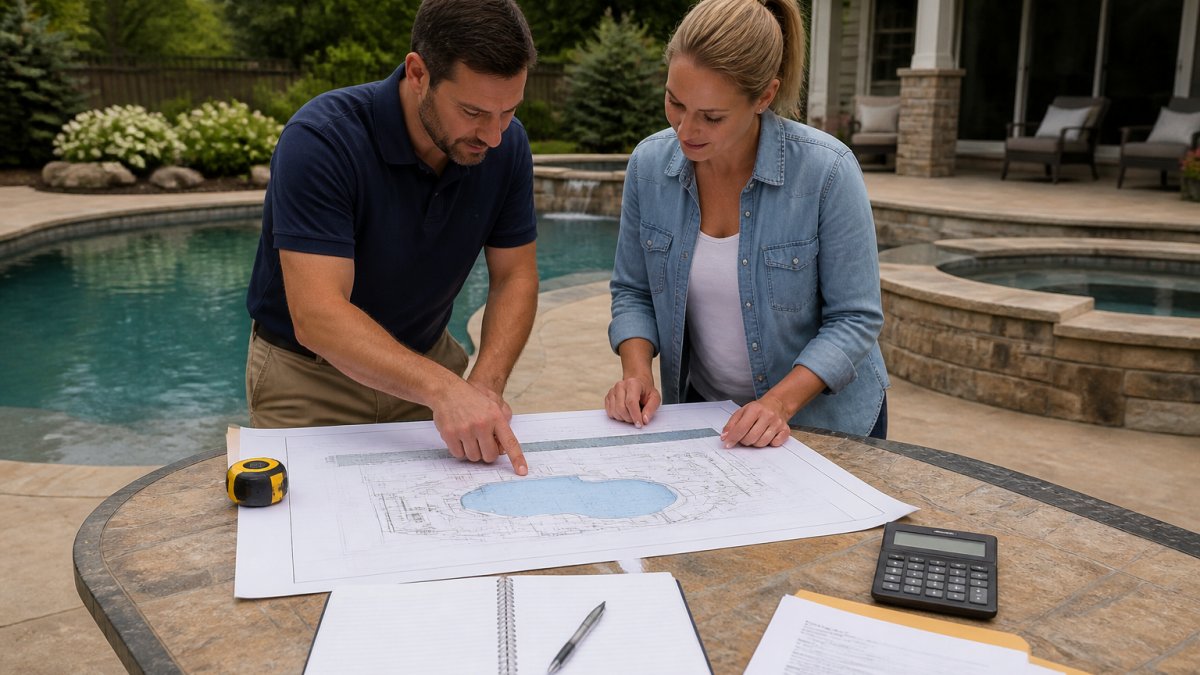
Here are the typical cost ranges for each major component of a spa retrofit to an existing inground pool.
| Component | Cost Range | Key Variable |
|---|---|---|
| Excavation and site prep | $2,500-$6,000 | Rock, groundwater, tight access |
| Gunite shell and interior finish | $8,000-$15,000 | Custom shapes, raised walls, spillways |
| Plumbing and circulation | $2,000-$5,000 | Distance from equipment pad |
| Electrical and controls | $1,500-$4,000 | Dedicated circuit, bonding, controller |
| Heater upgrade or addition | $2,500-$6,500 | Gas, heat pump, or dedicated spa heater |
| Deck removal and restoration | $1,500-$5,000 | Matching discontinued decking |
| Permits and inspections | $500-$2,500 | Jurisdiction and project value |
| Total all-in retrofit | $25,000-$55,000 | Premium finishes, difficult access |
Standalone Spa Versus Pool-Spa Combination: Which Costs Less
The honest answer depends on what you already own and how you plan to use the spa.
Upfront Cost Comparison
- Standalone above-ground spa: $4,000-$15,000 installed, plus a pad and electrical. Fastest and cheapest upfront, but it is a separate structure with its own maintenance and a shorter lifespan than gunite.
- Standalone inground spa (not tied to the pool): $20,000-$45,000. Its own shell, plumbing, equipment, and heater. Simpler to permit than a retrofit in some jurisdictions because it does not alter the pool, but it duplicates equipment.
- Integrated retrofit to an existing pool: $25,000-$55,000 typical, as itemized above. Highest upfront cost in most cases, but it reuses the pool's structure, deck, and often its equipment pad.
A standalone inground spa is not automatically cheaper than a retrofit once you add its own heater, electrical run, and decking. The retrofit wins when the pool equipment is in good shape and the spa can share it.
Shared Versus Separate Equipment: The Real Trade-off
- Shared pump, filter, and heater: Lower upfront cost and one system to service. But the heater must be sized for the combined volume, spa heat-up is slower, and you lose independent temperature control unless you add valves and actuators.
- Dedicated spa equipment: Higher upfront cost ($3,000-$8,000 more) but faster heat-up, independent control, and redundancy. A dedicated spa heater also lets you keep the pool cooler in summer while the spa stays hot.
- Hybrid: Shared filtration with a dedicated spa heater and blower. Often the best value for retrofits.
Ask for quotes both ways, the difference in upfront price is real, but so is the difference in how you'll use the spa.
Operating Costs and Energy Use
Installation price is only part of ownership:
- Heating: The largest ongoing cost. A gas heater for a spa can run $50-$150 per month in moderate use; a heat pump is more efficient but slower to heat and costs more upfront. Keeping the spa covered when not in use cuts heat loss substantially.
- Electricity: Pumps, blowers, and controls typically add $20-$60 per month depending on run time and local rates.
- Chemicals and maintenance: $30-$80 per month for a shared system; more for a standalone spa with its own water chemistry.
A shared system usually costs less to operate because you're not running two pumps and two heaters; a dedicated system costs more but gives you control and redundancy.
Which Option Fits Your Situation
- Choose a standalone above-ground spa if budget is tight, you want minimal construction, and you are unsure how often you will use it.
- Choose a standalone inground spa if you want a permanent look but do not want to alter your existing pool or share its equipment.
- Choose an integrated retrofit if your pool equipment is in good condition, you want a seamless look, and you value shared maintenance and lower operating costs.
Get at least two bids per option you are seriously considering, and ask each contractor to state explicitly whether the quote assumes shared or dedicated equipment.
Pool and Spa Construction Timeline and Cost Impact
Timeline directly affects cost: longer projects mean more labor hours, extended equipment rental, and potentially higher material costs.
Most spa additions to existing pools take 4 to 8 weeks from start to finish, including permit approval (which can add 2-4 weeks), excavation, plumbing and electrical rough-in, gunite work, equipment installation, and final inspections. Rain can halt excavation and delay concrete curing.
Seasonal timing matters too. Spring and summer are peak seasons, so projects may take longer because crews are fully booked.
If your family wants to use the spa this summer, start planning and permitting now.
Inground Spa Design Ideas That Fit Your Budget
Your spa's design affects both construction cost and daily enjoyment.
Budget-friendly designs focus on function.
Mid-range designs add multiple seating areas, targeted-massage jet configurations, and upgraded lighting, more luxurious and functional without extreme cost.
Premium designs include custom shapes, natural stone finishes, integrated waterfalls, advanced automation, and high-end lighting, beautiful and feature-rich, but significantly more to design and build.
Match your design to your actual needs: a spa you'll use daily doesn't need every premium feature, while one built for occasional entertaining might benefit from better aesthetics and seating.
Getting an Accurate Estimate for Your Spa Addition Project
An accurate estimate requires a detailed site assessment and clear project scope.
Start by documenting your existing pool and site:
- Pool dimensions and current equipment
- Yard size and slope
- Soil type and drainage patterns
Share this with contractors; a professional will visit your site, assess conditions, and discuss your goals before estimating.
Request an estimate from Howland Pools to understand your specific project costs and timeline.
A complete estimate should itemize excavation, equipment, plumbing, electrical, concrete work, permits, and labor, plus the timeline and any site-specific challenges affecting price. Learn how Howland Pools designs and builds custom inground pools and spas entirely in-house to understand the company's design and construction process before committing to a spa addition.
Compare estimates on scope, timeline, experience, and warranty, not just price.
Adding a spa to your inground pool transforms your backyard into a complete retreat.
Frequently Asked Questions
What is the typical cost to add a hot tub to an existing pool?
The cost to add a hot tub to an existing pool depends on whether you choose a standalone unit or integrate it into your pool system. Standalone options are generally less expensive upfront but require separate equipment and plumbing. Integration with your existing pool allows shared equipment, which can reduce long-term operating costs. Your specific costs depend on spa size, jet configuration, materials, site conditions, and local labor rates. Contact a local contractor for a detailed estimate based on your property and preferences.
Can I add an inground spa to my existing pool?
Yes, you can add an inground spa to your existing pool through either a standalone installation adjacent to the pool or by integrating it into the pool system. Standalone spas are built separately with their own equipment and plumbing. Integrated spas share circulation systems and can be positioned directly adjacent to or connected to your pool. The feasibility depends on your available space, existing pool structure, soil conditions, and utility access. A structural engineer can evaluate your specific property to determine the best approach.
How long does it take to add a spa to an existing pool?
A typical pool and spa construction timeline ranges from 4 to 8 weeks for a standard addition, depending on complexity, site conditions, and permit approval time. Excavation and site preparation may take 1-2 weeks. Structural work (gunite shell, decking) typically requires 2-3 weeks. Plumbing, electrical, and equipment installation add another 1-2 weeks. Permit processing can add 2-4 weeks before work begins. Weather, soil conditions, and design customization can extend the timeline. Discuss realistic timelines with your contractor during the planning phase.
What affects the cost of adding a spa to an inground pool?
Major cost factors include excavation and site preparation, spa size and capacity, material choice (concrete shell, decking type), equipment options (pump, filter, heater, jet configuration), electrical and plumbing complexity, permits and inspections, labor rates in your region, and design customization. Whether you integrate the spa with existing pool equipment or install separate systems also impacts cost. Site-specific challenges like difficult soil conditions or limited access can increase expenses. Get multiple contractor estimates to understand how these factors apply to your property.